 Bellingham Roofing
 Replacing a Deck in York's Bellingham Climate
York is one of Bellingham's older, established neighborhoods, and a lot of the decks out there are showing their age the same way the rest of the housing stock is — solid bones, but built at a time when nobody was thinking hard about corrosion-resistant fasteners or drainage gaps between boards. Add in Whatcom County's climate, where salt air, driving rain, and a moss season that runs most of the year all work on an exterior structure with no roof over it, and a deck that looked fine ten years ago can be quietly failing underneath by the time it's obviously a problem on top.
Deck replacement is a different job than a new build. You're not just designing for a blank lot — you're dealing with an existing structure, often existing landscaping and grade around it, and usually a homeowner who wants to know honestly whether the deck can be saved or whether it's time to start over. This page covers what that decision looks like for a York property specifically, what a correct replacement involves, and how our process works once you decide to move forward.
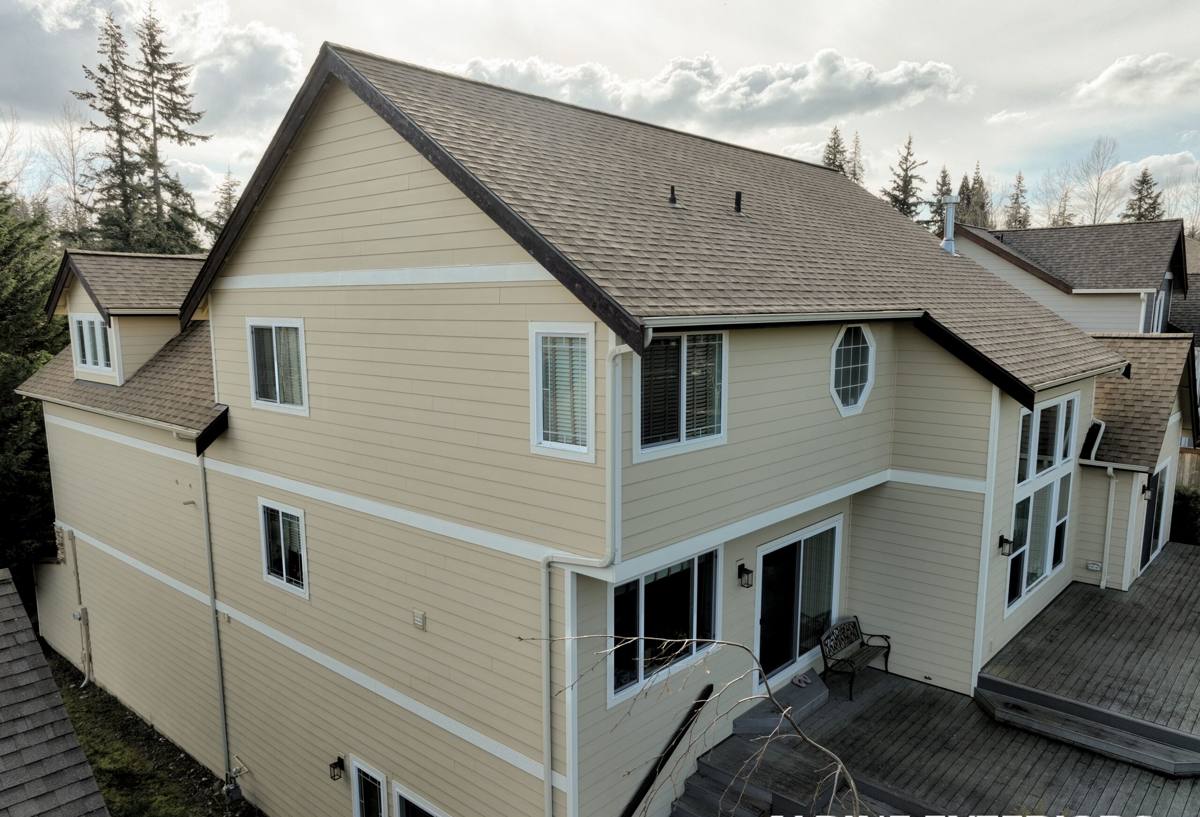
Signs a Deck Needs Replacing, Not Just Repairing
Not every tired-looking deck needs to come out. Some just need new boards, a hardware upgrade, or a good cleaning and resealing. The difference usually comes down to what's happening in the structure underneath, not just what the surface looks like. Worth checking before deciding either way:
- Soft or spongy spots in the decking or framing when you walk across them, especially near the house or in shaded corners
- Visible rot, dark staining, or fungal growth at the ledger board where the deck attaches to the house
- Fasteners or hardware with heavy rust or corrosion, particularly on older galvanized hardware that wasn't rated for coastal exposure
- Railing posts that wobble or flex more than they should when pushed
- A support post or footing that's visibly shifted, cracked, or sitting in standing water
- Gaps between boards that have closed up or warped unevenly, trapping moisture instead of shedding it
- A deck that's more than 20 years old and has never had a structural inspection
One or two of those on their own might point to a repair. Several together, especially anything involving the ledger connection or support posts, usually means the honest answer is replacement rather than patching a structure that's already compromised.
What Bellingham's Climate Does to an Aging Deck
Salt Air and Corrosion
Bellingham sits on Bellingham Bay, and salt-laden air moves through the whole area, York included, even for homes that aren't waterfront. Salt accelerates corrosion in exposed metal — nails, screws, joist hangers, post brackets — and older decks built before corrosion-resistant hardware was standard practice are often held together with fasteners that have been quietly weakening for years. A fastener doesn't have to look badly rusted to have already lost a meaningful amount of holding strength.
Driving Rain
Storms in this part of Whatcom County don't just fall straight down. Wind pushes rain sideways and drives it up under railings, behind trim, and into ledger connections that were sealed adequately when the deck was new but have since dried out, cracked, or never had proper flashing to begin with. That's one of the most common failure points we find when we open up an older deck for replacement — water's been getting behind the ledger board for years before it showed on the surface.
A Long Moss Season
Mild, damp conditions give moss and mildew a growing season that runs most of the year here, and older decks with mature trees nearby — common in a neighborhood like York with established landscaping — deal with more shade and organic debris than a newer build on a cleared lot. Moss holds moisture against the board surface, and on wood decking especially, that sustained dampness is what eventually leads to the soft spots and rot that push a deck from "needs work" to "needs replacing."
Choosing Decking Material for the Replacement
When a deck comes out, it's a chance to upgrade material, not just replace what was there. The right call depends on budget, how much shade the site gets, and how much upkeep the homeowner actually wants to keep up with.
| Material | Moisture & Salt Air Resistance | Moss Resistance | Upkeep |
|---|---|---|---|
| Cellular PVC | Excellent — no wood fiber to absorb moisture | Strong, smooth non-porous surface | Occasional washing |
| Capped composite | Strong — cap layer resists moisture and staining | Good on most product lines | Occasional washing |
| Uncapped composite | Moderate — exposed fiber can absorb moisture over time | Fair; more prone to buildup | Periodic cleaning |
| Cedar | Moderate — natural resistance, but needs sealing | Fair when sealed and maintained | Regular oiling or sealing |
| Pressure-treated wood | Weak against sustained salt exposure over time | Poor without regular treatment | Regular sealing or staining |
For a shaded York lot with mature trees overhead, we lean toward steering homeowners away from uncapped composite and untreated wood, since those are the two materials that show moss and staining fastest under sustained shade. That's a maintenance and moisture-behavior tradeoff we're upfront about, not a knock on the products themselves — they can work fine in a sunnier, more exposed location, just not as well here.
Matching the Look to an Older Home
A lot of York homes have real character — older construction styles, established trim and siding details — and a deck replacement is a chance to pick a color and board profile that actually complements the house rather than looking like a stock addition. This matters more on a visible front or side deck than on a private back deck, but it's worth a conversation either way before locking in a material.
What a Correct Deck Replacement Involves
Tearing out an old deck and building a new one on the same footprint sounds simple, but the details underneath are what determine whether the new deck lasts twenty-plus years or starts showing the same problems in five. A replacement done right includes:
- Full removal of the old decking, framing, and hardware — not decking swapped onto an old, potentially compromised substructure
- Inspection and, where needed, replacement of footings and posts, since a footing that's shifted or deteriorated won't get better under new decking
- Proper ledger board flashing at the house connection, correcting whatever gap in the original installation let water in over the years
- Stainless steel or coastal-grade corrosion-resistant fasteners throughout, sized for the decking product and load
- Joist spacing matched to the new decking material's actual span rating, rather than reusing the old framing layout by default
- Correct board gapping for drainage and material movement, so the new surface actually sheds wind-driven rain instead of trapping it
- Grading and ventilation underneath the deck so moisture doesn't sit against the new framing between storms
- Proper disposal and haul-away of the old decking and hardware, so the site is clean when the job's done
Skipping the substructure work to save time is the single most common shortcut that leads to a "new" deck failing early. A fresh set of boards on old, corroding hardware and a leaking ledger connection just delays the same problem by a few years.
Working Around an Established York Lot
Replacing a deck on an older, developed property comes with logistics that a new build on a cleared lot doesn't. Mature trees and landscaping common in York mean more care around root systems and overhead branches during demolition and rebuild, and often more attention to drainage design since established grading around the house wasn't necessarily planned with a deck's runoff in mind. Older homes can also have ledger connections, siding, or trim that need careful, non-destructive removal and proper re-flashing once the new deck ties back in, rather than a rough tear-out that damages siding that's no longer easy to match. None of that is unusual for this kind of neighborhood, but it does mean a replacement here benefits from a crew that's used to working carefully around an occupied, landscaped property rather than a blank site.
How Our Deck Replacement Process Works
We start with an on-site look at the existing deck — checking the framing, footings, ledger connection, and hardware to give an honest read on what's actually failing versus what's cosmetic. From there we walk through material options and layout with the homeowner, including anything worth changing from the original design, whether that's a wider stair run, a different railing style, or reworking the footprint slightly.
Once material and scope are set, we handle permitting through the City of Bellingham, which for most straightforward deck replacements is a standard review, and pull whatever inspections the project requires. Demolition and haul-away come first, followed by footing and structural work, then framing, decking, railing, and any stairs or trim. We finish with a walkthrough on what the new material actually needs going forward — for most modern decking, that's not much, but it's not nothing either.
Keeping a New Deck Ahead of the Climate
A properly built replacement still needs some routine attention to get its full lifespan out of Bellingham's climate. Worth keeping on a yearly schedule:
- Rinse the deck surface periodically to clear salt residue, pollen, and organic buildup before it sets into the surface or cap layer
- Keep gaps between boards clear of leaves and debris, especially under trees, so water and airflow move the way the design intends
- Check railing posts and hardware once a year for early corrosion or loosening, particularly heading into the wet season
- Trim back branches or plantings that hold moisture against the deck or block sun and airflow across the surface
- Address any soft framing or standing water underneath immediately — that's a structural issue, not a cosmetic one
Why It Matters That We Already Work in York
A crew that doesn't regularly work Bellingham's older neighborhoods can still tear out and rebuild a deck competently, but a York replacement has variables that come up more often here than on a newer build elsewhere in Whatcom County — ledger connections on older homes that need careful re-flashing, established trees and landscaping to work around, and moss and moisture patterns shaped by decades of shade rather than a fresh lot. Working this neighborhood regularly means we've already seen how these older decks tend to fail and where the shortcuts from the original build usually show up, so we're not discovering it for the first time on your project.
That familiarity also shows up in smaller judgment calls — knowing which parts of an old deck are worth inspecting closely before quoting a job, and being straightforward with a York homeowner about what actually needs replacing versus what's just cosmetic wear.
Get a Straight Answer About Your Deck
If your deck in York is showing soft spots, rust-stained hardware, or just feels past its useful life, we're glad to take a look and give you an honest read on repair versus replacement. Reach out below for a free, no-pressure estimate.