 Bellingham Roofing
 Storm Damage on Bellingham Bay: What Silver Beach Roofs Are Up Against
Silver Beach sits close enough to Bellingham Bay that the roofs here take a different kind of beating than roofs a few miles inland. Wind off the water drives rain sideways under shingle tabs and flashing laps that would stay dry in a calmer neighborhood. Salt-laden air speeds up corrosion on exposed fasteners, drip edge, and metal flashing. And because the tree canopy around this part of Whatcom County holds moisture close to the roof deck for much of the year, moss and algae get a head start that inland roofs don't deal with as early or as often.
None of that means Silver Beach roofs fail faster than everyone else's — it means they need repair work that accounts for those specific stresses. A patch that would hold up fine in a dry, sheltered subdivision can fail within a season here if it doesn't account for wind-driven rain and salt exposure. That's the gap we aim to close: repairs sized and detailed for what this specific stretch of coastline actually throws at a roof.
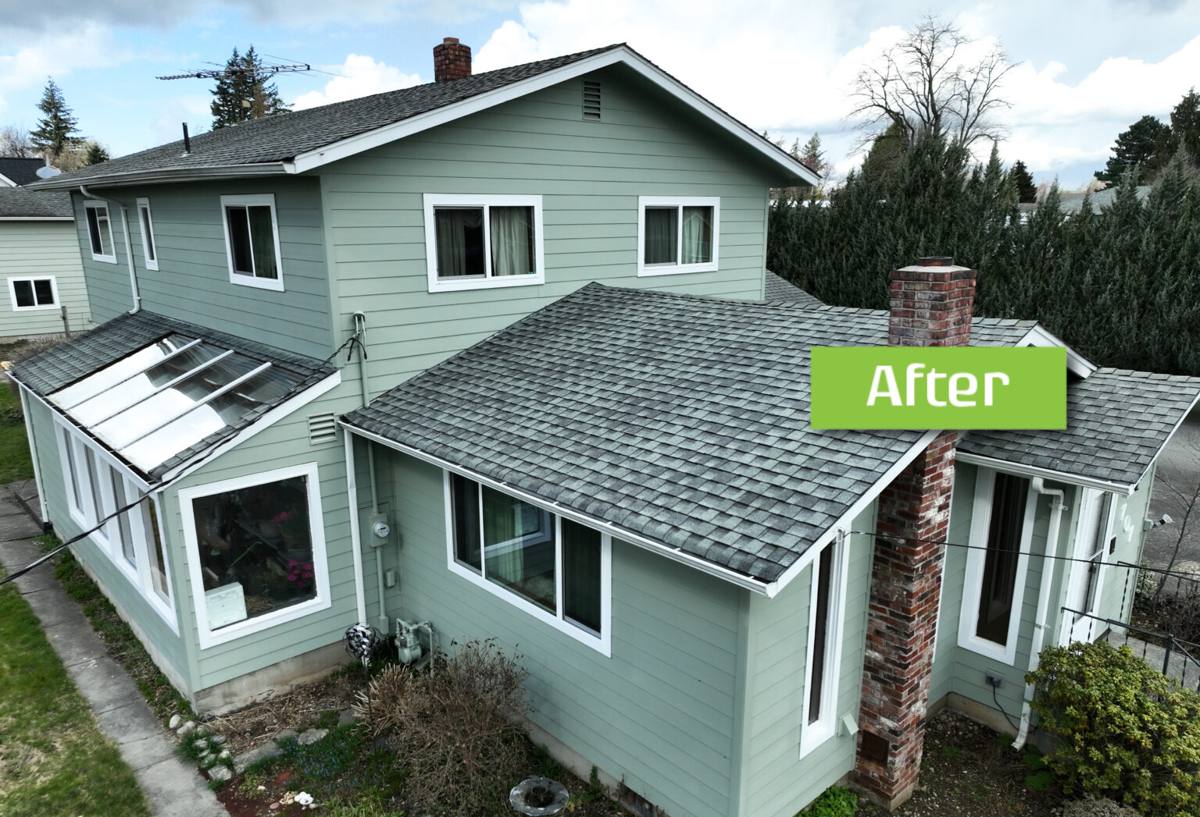
What "Storm Damage" Actually Looks Like Here
Storm damage isn't always a dramatic missing-shingle scene. In Silver Beach, it more often shows up as slower, quieter failures that started with one storm and got worse with the next.
Wind Damage
Gusts off the bay can lift shingle tabs without tearing them off completely, breaking the seal strip underneath. The shingle looks fine from the ground but no longer sheds water the way it should. Repeated wind events loosen ridge cap and ridge vent fasteners, and older three-tab shingles are especially prone to creasing along the tab line in sustained wind.
Wind-Driven Rain
This is the one that catches homeowners off guard. Rain that's being pushed sideways instead of falling straight down can work its way under flashing at chimneys, skylights, and sidewalls — areas that are perfectly watertight in normal rainfall. If you've noticed a stain that only appears after a windy storm and not after a calm one, that's a strong sign of wind-driven intrusion at a flashing point, not a general roof-age issue.
Debris and Impact
Branch strikes from mature trees are a real factor in this neighborhood. Even a glancing hit can crack shingles, dent metal flashing, or knock granules loose in a way that isn't visible from the ground but shortens the life of that section of roof.
Moss and Trapped Moisture
Long moss season doesn't cause storm damage directly, but it compounds it. Moss holds water against the shingle surface and lifts tabs slightly as it grows, which gives wind-driven rain an easier path underneath. A roof with active moss growth going into storm season is more vulnerable than a clean one, even if the shingles themselves are the same age.
What a Correct Storm Repair Actually Involves
A lot of "storm damage repair" in this trade is really just surface patching — a dab of sealant over a visible crack, a new shingle nailed over the old one. That approach often hides a problem instead of solving it. A repair done right starts with figuring out how water actually got in, not just where it's showing up inside the house.
Our approach on a storm repair call:
- Inspect the full roof plane, not just the area over the reported leak — wind and water travel, so the entry point is often several feet from the stain
- Check flashing at every penetration and sidewall on that plane, since flashing failure is the most common source of wind-driven leaks
- Assess shingle seal integrity, not just look for missing pieces — a lifted, unsealed shingle is a failure even if it's still nailed down
- Check underlayment condition where shingles are pulled for repair, since a compromised deck or underlayment changes the scope of the fix
- Match repair materials to the existing roof system so the patch weathers and seals the same way the surrounding roof does
- Re-seal and re-fasten with corrosion-resistant hardware appropriate for a salt-air environment
The goal is a repair that holds through the next windstorm off the bay, not one that needs to be revisited every winter.
Our Process, Start to Finish
1. Inspection and Documentation
We walk the roof (or use a safe vantage point where the roof pitch or condition doesn't allow safe foot traffic) and document the damage with photos, noting both the storm-related damage and any pre-existing wear that's relevant to the repair scope.
2. Honest Scope and Estimate
You get a clear explanation of what's damaged, what's causing it, and what it will take to fix — including whether it's a straightforward patch or something that points to a bigger issue, like widespread seal failure or aging underlayment. We'd rather tell you a repair is a stopgap than sell it as a permanent fix if it isn't.
3. Insurance Documentation, If Needed
If the damage is significant enough to involve your homeowner's insurance, we provide the photo documentation and written scope you'll need for a claim. We're not a public adjuster, but we make sure the paperwork accurately reflects what we found.
4. The Repair
Work is done to match the existing roof system — same or compatible shingle type, correct flashing details, and fasteners rated for coastal exposure. We don't cut corners on the parts that are hard to inspect later, like underlayment laps and flashing seals, because those are exactly the details that determine whether the repair lasts.
5. Follow-Up
After a major storm event, especially, we'd rather you call and ask us to double-check something than wait and find out there's a slow leak in six months.
Repair vs. Replacement: How We Help You Decide
Not every storm-damaged roof needs to be replaced, and not every roof can be reasonably patched. The honest answer depends on the age and condition of the roof, not just the size of the damaged area.
| Factor | Leans Toward Repair | Leans Toward Replacement |
|---|---|---|
| Roof age | Under 10-12 years, shingles still flexible | Approaching or past expected lifespan for the material |
| Damage extent | Localized to one plane or penetration | Spread across multiple roof planes |
| Seal condition elsewhere | Rest of roof still sealing well | Widespread seal failure found during inspection |
| Underlayment condition | Intact where checked | Deteriorated or saturated where exposed |
| Storm history | First significant damage event | Repeat damage in the same areas over multiple storms |
We'll tell you plainly which category your roof falls into. A patch on a roof that's genuinely near the end of its service life usually costs you more over a couple of years than doing the replacement once.
Why Salt Air and Moss Season Change the Materials Conversation
Coastal exposure and Whatcom County's long wet season affect what we recommend for repair materials, not just how often repairs are needed.
Fasteners and Flashing
We use corrosion-resistant fasteners and flashing on Silver Beach repairs as standard practice, not an upsell. Standard galvanized hardware can start showing rust streaks and early corrosion faster this close to the water, which eventually compromises the seal it's supposed to maintain.
Sealants
Not all roofing sealants perform the same under near-constant damp conditions. We choose products rated for prolonged moisture exposure rather than ones that are fine in a drier climate but tend to crack or lose adhesion faster under Bellingham's wet-season conditions.
Moss Prevention as Part of the Repair
When we're already on the roof for a storm repair, it's worth addressing nearby moss growth at the same time — clearing it and, where appropriate, discussing zinc or copper strip options for ongoing suppression. Leaving moss in place next to a fresh repair undermines the work by trapping moisture right at the repair site.
Why a Crew That Already Works Silver Beach Matters
Roofing crews unfamiliar with this specific stretch of coastline sometimes underestimate wind-driven rain intrusion because they're used to diagnosing leaks in more sheltered inland settings. A crew that regularly works Silver Beach and similar Bellingham Bay-adjacent neighborhoods knows to check flashing details first, expects moss to be a factor in leak diagnosis, and specs materials for salt exposure by default rather than as an afterthought. That local pattern recognition shortens the time between "there's a stain on my ceiling" and "here's what's actually wrong."
It also means faster response during and after actual storm events, when roads and scheduling get tight across Whatcom County and every roofing crew in the area is fielding calls at once.
Simple Storm-Season Checklist for Silver Beach Homeowners
- Check attic or ceiling for new stains after any storm with sustained wind, not just after heavy rain
- Look at exposed flashing (chimney, skylights, wall intersections) from the ground with binoculars after major storms
- Clear gutters and downspouts before storm season so wind-driven rain has somewhere to go
- Note whether moss coverage has increased since last season — more moss means more moisture retention going into winter storms
- Have any storm event that caused visible debris on the roof or yard inspected, even if you don't see an active leak yet
- Keep a record of storm dates alongside any leak symptoms — it helps us and your insurer pinpoint cause and timing
Get a Straight Answer on Your Roof
If a recent storm off the bay has you wondering whether that stain, that missing shingle, or that patch of moss is something to worry about, we're happy to take a look. We'll tell you honestly whether it's a simple repair, a bigger issue, or nothing urgent at all. Reach out for a free, no-pressure estimate using the form below.