 Bellingham Roofing
 Sehome's Roofs Face a Specific Kind of Wear
Sehome sits close enough to Bellingham Bay to catch salt-laden air off the water, and close enough to Sehome Hill's tree cover to stay shaded and damp for long stretches of the year. That combination is harder on a roof than either factor alone. Salt air accelerates corrosion on metal flashing, fasteners, and vents. Shade and moisture keep shingles wet longer after every rain, which is exactly what moss, moss spores, and algae need to take hold. Add Whatcom County's long wet season and driving rain that comes in sideways off the water, and you get a roof that ages differently than one in a drier, more open part of the county.
A lot of the homes in Sehome are older — Craftsman-era bungalows and mid-century houses mixed in with newer infill construction near Western Washington University. Older roofs in this neighborhood were often built before today's ventilation and underlayment standards existed, which means a roof that "looks fine" from the street can still be failing underneath. When we talk about roof replacement in Sehome specifically, we're talking about correcting for all of that, not just laying down new shingles over the same problems.
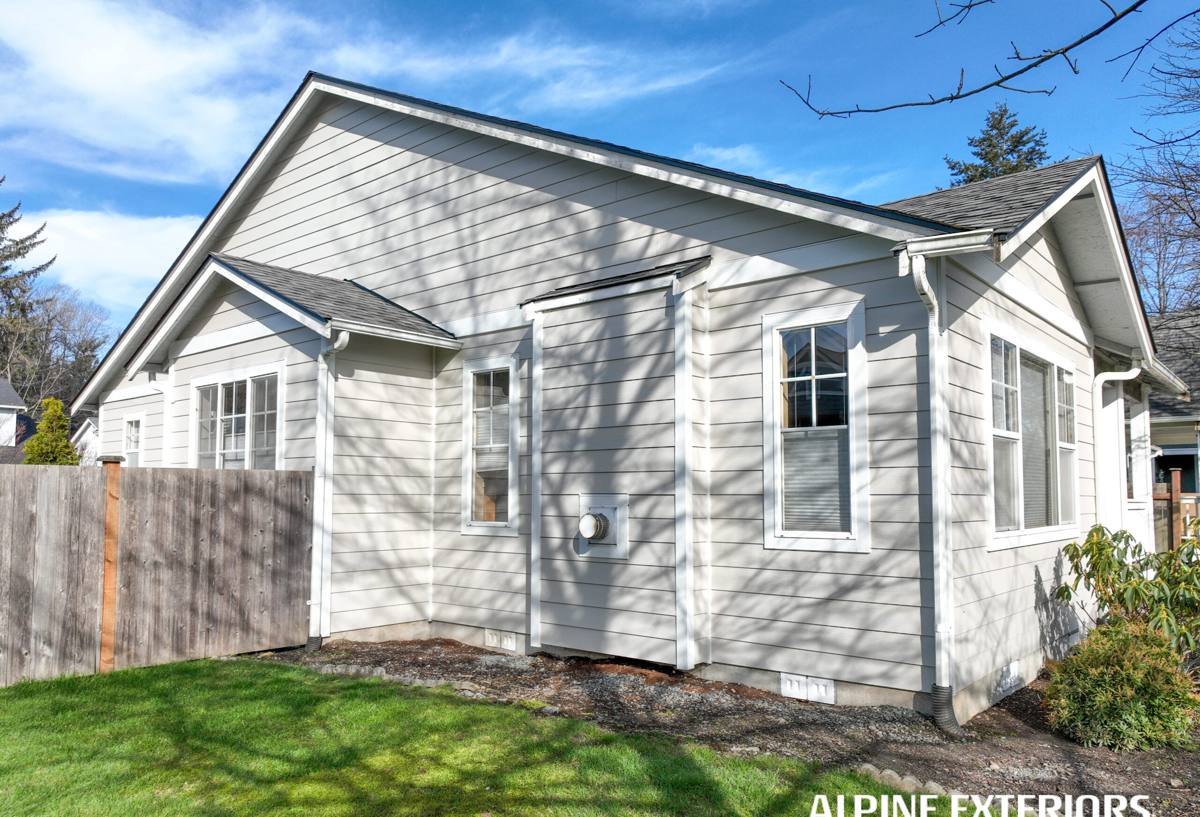
Repair or Replace: Reading the Signs
Not every roof problem in Sehome means a full tear-off. But there's a point where patch repairs stop being the honest recommendation and a full replacement becomes the responsible one. Here's how we tell the difference on site.
Signs a Repair Still Makes Sense
- A localized leak tied to one flashing detail or a small area of damaged shingles
- Roof is under 15 years old with no widespread granule loss
- Moss is present but hasn't lifted shingle edges or reached the deck
- No soft spots or sagging when walked
Signs You're Looking at Replacement
- Shingles curling, cracking, or losing granules across large sections, not just one spot
- Moss or algae staining that's returned repeatedly after cleaning
- Soft or spongy decking, or daylight visible through the roof from the attic
- Multiple past repairs in different areas — a sign the roof system as a whole is aging out
- Roof is original to a home built before the 1990s and has never been fully replaced
We'll always tell you honestly which category your roof falls into. If a repair will genuinely hold for a few more years, that's what we'll recommend — a Sehome roof replacement is a significant investment, and we'd rather earn that job when it's actually due.
What a Correct Full Roof Replacement Includes
A roof replacement done right in Sehome's climate isn't just new shingles on the old deck. It's a full system, and each layer matters more here than it would somewhere drier.
Tear-Off and Deck Assessment
We remove the old roofing down to the deck rather than layering over it. That's the only way to actually see what's underneath — soft or rotted plywood, water staining, or old damage that's been hidden by shingles for years. Any compromised decking gets replaced before anything new goes down. Skipping this step is how a new roof ends up failing early from a problem that was never actually fixed.
Underlayment and Moisture Barriers
Given how much rain Bellingham sees, the underlayment matters as much as the shingles themselves. We install a synthetic underlayment as the primary moisture barrier, with self-adhered ice-and-water barrier at the eaves, valleys, and any roof-to-wall transitions — the spots where wind-driven rain is most likely to find a way in. On a home like the ones common in Sehome, with mature trees dropping debris and shaded valleys that stay wet longer, that extra protection at the vulnerable points is not optional.
Ventilation That Actually Works
Poor attic ventilation is one of the most common hidden problems we find on older Sehome homes. Without a balanced intake-and-exhaust system, moisture gets trapped in the attic, which shortens the life of the new roof from underneath and can encourage mold and wood rot regardless of how good the shingles are. We check and correct ventilation as part of every replacement — it's not an add-on, it's part of doing the job correctly.
Choosing Roofing Materials for a Sehome Home
There's no single "best" material for every house — it depends on your roof's pitch, how much shade and tree cover you have, and how much long-term maintenance you want to take on. Here's how the common options compare for a home in this kind of climate.
| Material | Moss/Algae Resistance | Typical Lifespan | Maintenance | Notes for Sehome |
|---|---|---|---|---|
| Architectural asphalt shingle (standard) | Moderate | 25-30 years | Periodic moss removal recommended | Good value; needs proactive moss care in shaded lots |
| Architectural shingle with algae-resistant granules | Higher | 25-30 years | Lower, but not maintenance-free | Worth the upgrade on shaded or tree-covered lots |
| Standing seam metal | High | 40-50+ years | Low | Sheds moisture fast; use quality coated fasteners near the bay to manage salt exposure |
| Cedar shake | Low without upkeep | 20-25 years | High | Traditional look, but retains moisture longer in shade — needs regular treatment |
For most Sehome homes, we steer clients toward algae-resistant architectural shingles or metal, simply because both hold up better against the shade-and-moisture pattern this neighborhood deals with every winter. Cedar can still be the right call for a homeowner who wants that look and is committed to the upkeep — we're honest about that trade-off rather than talking anyone out of a style they want.
Moss, Algae, and Salt Air: Long-Term Defense
Replacement is the reset button, but what happens afterward determines how long that new roof actually lasts. A few things make a real difference on a Sehome roof:
- Copper or zinc strips near the ridge, which release trace minerals with rain runoff that inhibit moss regrowth over the whole slope
- Keeping gutters clear of the leaf and needle debris that's constant under mature tree cover, since clogged gutters back water up under the shingle edge
- Corrosion-resistant fasteners and flashing on homes closer to the bay, where standard galvanized hardware corrodes faster than it would further inland
- Trimming overhanging branches where practical, to reduce the shade and debris load on the roof plane
None of this replaces a good roof system — it just protects the investment once it's in place.
Our Replacement Process, Start to Finish
- On-site inspection — we walk the roof (or inspect from the attic and exterior if it's not safely walkable), check the deck, ventilation, and flashing details, and take photos to document condition.
- Written estimate — a clear scope of work and price, broken down by material and labor, with no vague allowances.
- Scheduling around weather — we plan the tear-off and dry-in for a window with a reasonable forecast, and we protect the open roof if conditions shift.
- Tear-off and deck repair — old roofing removed, deck inspected and repaired as needed.
- Underlayment, flashing, and ventilation install — the layers that do the real waterproofing work.
- New roofing material installed to manufacturer specification, which matters for both performance and warranty coverage.
- Cleanup and magnetic nail sweep of the property, including gutters if they were affected by the work.
- Final walkthrough with the homeowner before we consider the job done.
Scheduling Around Bellingham Weather
Whatcom County's wet season runs long, and Sehome's tree cover means the ground and roof surfaces stay damp even between storms. That affects how we schedule replacement work — we watch multi-day forecasts closely rather than just the day of, since a roof torn open and caught by an unexpected system is a real problem. We also use dry-in materials that let us close in a section of roof quickly if weather moves in mid-project. Late spring through early fall tends to give the most predictable windows, but we replace roofs in Sehome year-round when conditions allow — we just plan around the rain instead of hoping it holds off.
Why Hire a Crew That Already Works in Sehome
A roofer who already works this neighborhood knows the general housing stock — the age range of the homes, the common ventilation shortfalls in older construction, the way shaded lots hold moisture longer than open ones a few blocks away. That's not something you get from a generic estimate. It shows up in small decisions: where we add extra ice-and-water barrier, whether we recommend algae-resistant shingles or standard ones, how we account for tree debris in the gutter and drainage plan. Those decisions are what separate a roof that looks fine on day one from one that's still performing correctly ten winters later.
We also carry proper licensing and insurance, and we're glad to have that verified before you hire anyone for a job this size — for your own protection, not just ours.
Questions to Ask Before You Commit to a Roofer
- Are you licensed and insured in Washington State, and can I see current proof?
- Will you inspect and repair the deck, or just install over whatever is there?
- What underlayment and ice-and-water barrier will you use, and where specifically?
- Will you evaluate and correct attic ventilation as part of the job?
- Is the estimate a fixed scope of work, or does it leave room for surprise add-ons?
- What's the manufacturer's warranty, and does your installation qualify for it?
Any roofer who can't answer these clearly and specifically is worth a second look before you sign anything.
If your roof in Sehome is showing its age, or you're just not sure whether you're looking at a repair or a replacement, we're happy to come take an honest look. The estimate is free, there's no pressure to sign anything on the spot, and you'll get a clear answer either way — use the form below to get started.