 Bellingham Roofing
 Barkley's Setting Puts Real Demands on Exterior Siding
Barkley sits inside Bellingham, close enough to Bellingham Bay and the Salish Sea that salt-laden air is a fact of life for anything mounted on an exterior wall. Add Whatcom County's long, wet fall-through-spring stretch of driving rain off the water, and a moss season that can run six months or more in shaded, north-facing yards, and you have a climate that is quietly hard on siding. It doesn't announce itself with one big storm — it wears materials down through repetition: damp cycles, salt residue, and organic growth that holds moisture against the wall long after the rain stops.
Homes in this part of Bellingham were built across several different decades, and a lot of the original siding — cedar, vinyl, engineered wood panels — is now reaching the point where the climate has caught up with it. Fiber cement isn't a trend product here; it's a material engineered to shrug off exactly the conditions Barkley sees every year, and it's the only siding material our crews install.
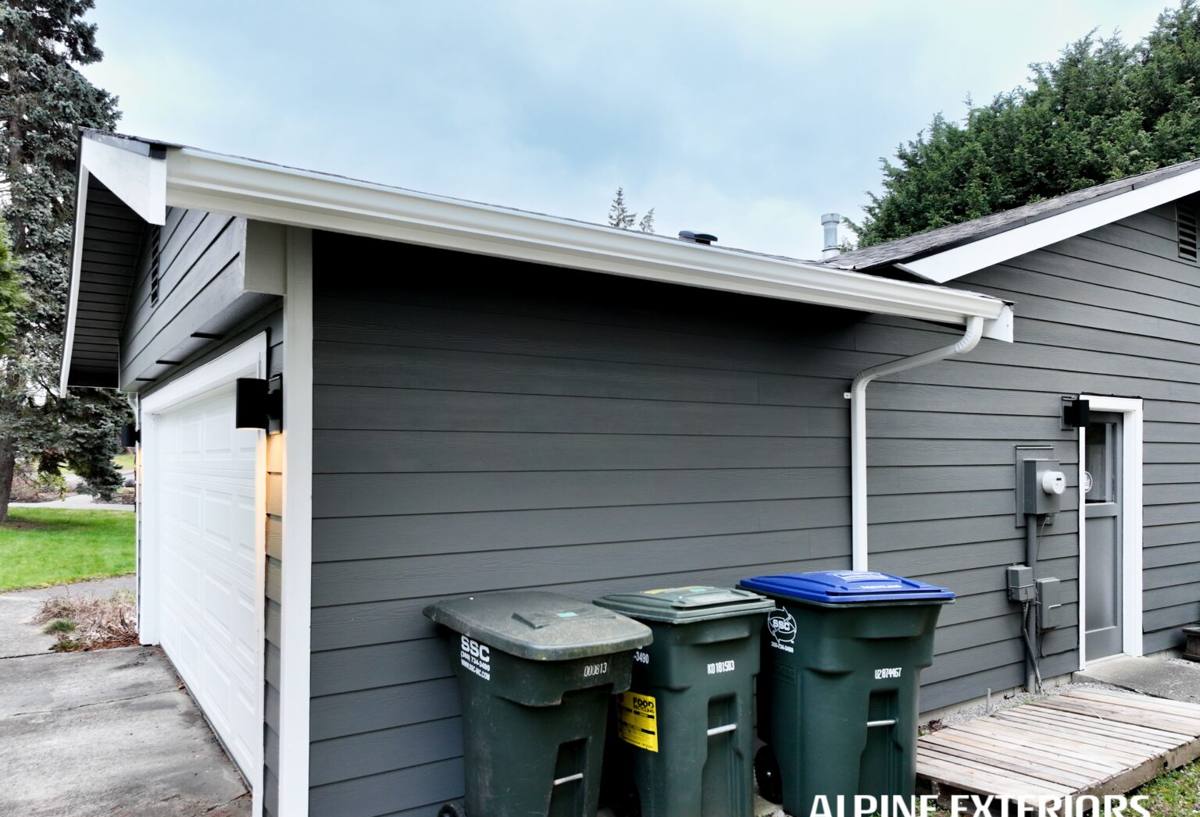
What Salt Air, Driving Rain, and Moss Actually Do to Siding
Salt Air
Airborne salt from the Bay settles on exterior surfaces and, combined with our regular rainfall, works into seams, fastener heads, and any exposed edge. On untreated wood and lower-grade composite products, that combination accelerates rot and finish breakdown over time. Fasteners and trim that aren't corrosion-rated will streak and weaken after years of this kind of exposure, even when the siding behind them still looks fine.
Driving Rain
Wind-driven rain off the water doesn't just fall straight down — storms push it sideways into laps, corners, and trim joints. Siding that isn't installed with correct overlaps, flashing, and a drainage gap will let water track behind the cladding, where it can sit against the sheathing for days at a time without anyone noticing until damage shows up on the interior wall.
Moss and Organic Growth
Shaded lots and the region's damp, mild winters are ideal conditions for moss, algae, and lichen to take hold. Once established on a wall, organic growth holds water against the surface far longer than an open, sun-exposed wall would ever stay wet. On materials with any core sensitivity to moisture, that sustained dampness is exactly where deterioration starts, often from the inside out before it's visible from the yard.
Why Fiber Cement Is the Right Material for This Climate
James Hardie fiber cement is manufactured from cement, sand, and cellulose fiber — there's no wood core to rot, no foam substrate to trap moisture behind it, and no organic material for moss to feed on directly. It's also non-combustible, which matters even outside the state's more fire-prone regions, as building codes and insurers increasingly pay attention to exterior material class statewide. For a Barkley home specifically, the practical benefit is simpler: a wall material that doesn't care about salt exposure, doesn't swell and split from repeated wetting and drying, and holds its factory-applied finish instead of needing repainting every few years like site-finished wood siding does.
We install only James Hardie products, not because other fiber cement brands are without merit, but because Hardie's manufacturing consistency, factory finish warranty, and climate-specific engineering give us a product we can stand behind on every job in this region.
What a Correct Installation Involves
Manufacturer Specs Aren't Optional
Fiber cement's long-term performance depends on more than the quality of the board itself — it depends on installing it to James Hardie's published specifications. That means the correct fastener type and spacing, minimum clearances above grade, roofs, and decks, proper sealant at butt joints and penetrations, and factory-cut or properly scored-and-snapped edges rather than rough, unsealed cuts left exposed to weather.
The Rainscreen Gap
In a climate that drives rain sideways for months at a time, the drainage gap behind the siding matters as much as the siding itself. A ventilated gap between the cladding and the water-resistive barrier lets any moisture that does get past the surface drain out and dry instead of sitting against the sheathing. Skipping this detail to save labor time is one of the most common corners cut on lower-bid siding jobs, and it's usually invisible until years later.
Mistakes We Regularly Correct on Older Homes
- Face-nailing or over-driving fasteners, which cracks the board's edge and creates a moisture entry point
- Butt joints left uncaulked, or caulked with a sealant that isn't rated for the movement and moisture cycling this climate produces
- Insufficient clearance where siding meets a deck, patio, or grade, letting splash-back and standing moisture reach the bottom edge of the board
- Skipping or shortcutting the rainscreen gap entirely to reduce labor hours
- Mixing incompatible trim or flashing metals that corrode faster once exposed to salt air
James Hardie Product Lines and Matching One to Your Home
James Hardie engineers different product lines for different climate zones, and homes in Whatcom County generally call for the line built around moisture and freeze-thaw cycling rather than dry-heat exposure. We size the specific product and finish to the site conditions on your lot — how much shade a wall gets, how much wind-driven rain it takes on, and how the home is oriented relative to the water all factor into that decision.
| Consideration | What It Means for a Barkley Home |
|---|---|
| Moisture-cycling engineering | Built for repeated wet-dry cycling typical of a Pacific Northwest marine climate rather than dry-heat regions |
| ColorPlus factory finish | Baked-on, multi-coat finish resists the fading and chalking that site-applied paint shows sooner in salt air |
| Panel and lap profiles | Available in lap siding, shingle-look panels, and vertical panel systems to match a home's existing architectural lines |
| Fastener and trim pairing | Installed with corrosion-resistant fasteners and compatible trim to avoid streaking and galvanic corrosion in coastal air |
Our Process for a Barkley Siding Project
Every project starts with a walk-around assessment of the actual home, not a generic estimate from a photo. We look at how much shade and moss exposure each wall gets, where wind-driven rain hits hardest, the condition of the sheathing underneath the existing siding, and any trouble spots — trim, window flashing, deck ledgers — that need attention before new siding goes on.
From there, the sequence is straightforward: remove the old siding and inspect the sheathing for hidden moisture damage, a step that cannot be skipped in this climate; repair or replace any compromised sheathing before anything new goes over it; install a code-compliant water-resistive barrier; set up a proper rainscreen gap; and then install the Hardie boards, trim, and flashing to manufacturer specification. We finish with detail work at corners, penetrations, and joints, followed by a full cleanup — old siding and debris hauled away, not left piled in the yard for the homeowner to deal with.
What Fiber Cement Siding Costs and What Drives the Number
Pricing depends on the home's size, the amount of trim and architectural detail, whether the existing siding needs full tear-off or there's hidden repair underneath, and which Hardie profile and finish you choose. We won't quote a firm number without seeing the house in person, but the factors below are what actually move a bid up or down from one Barkley home to the next.
| Factor | Why It Matters |
|---|---|
| Sheathing condition under old siding | Hidden moisture damage from years of salt air and moss exposure adds repair scope once walls are opened up |
| Exterior complexity | Dormers, multiple gables, and detailed trim take more labor per square foot than a simple, rectangular wall |
| Siding profile and finish | Lap siding, shingle-style panels, and premium ColorPlus finish options carry different material costs |
| Site access and conditions | Tight lots, slopes, or landscaping that limits staging area affect labor time and scheduling |
Living With Fiber Cement Siding in a Moss-Prone, Salty Climate
Fiber cement lowers the maintenance burden considerably compared to what Barkley homeowners are used to with wood or lower-grade composite siding, but low-maintenance doesn't mean no maintenance. A little seasonal attention keeps it looking and performing the way it should for decades rather than years.
- Rinse the walls once or twice a year, especially shaded or north-facing sections where moss and algae take hold fastest
- Keep gutters clear so overflow doesn't run down the face of the siding and feed moss growth below
- Trim back landscaping that shades siding or holds moisture against the wall longer than necessary
- Inspect caulked joints every year or two, and have any cracked or missing sealant redone before the wet season sets in
- Address any impact damage, like a dented corner or cracked board, promptly rather than letting moisture find a way in behind it
Why Hiring a Crew That Already Works in Barkley Matters
A siding crew that works across Bellingham and Whatcom County regularly has already seen how this specific combination of salt air, driving rain, and moss season plays out on real homes over real years — which walls fail first, which details get skipped on cut-rate jobs, and what actually holds up rather than just surviving one dry summer. That local pattern recognition is worth more than a generic install crew that treats every region the same way. It shows up in the small decisions on a job: where to add extra flashing, which side of the house needs a wider rainscreen gap, and how to sequence a tear-off around our region's wet-season weather windows so exposed sheathing isn't sitting open any longer than it has to be.
If your Barkley home's siding is showing its age — chalky or fading paint, soft spots near the bottom edge, or moss that keeps coming back no matter how often it's rinsed off — we're happy to take a look. Reach out for a free, no-pressure estimate, and we'll walk the exterior with you and lay out exactly what your home needs.