 Bellingham Roofing
 Building a Deck That Can Handle Fairhaven's Climate
Fairhaven sits close to Bellingham Bay, and that proximity to saltwater changes what a deck needs to survive here compared to a deck built twenty miles inland. Salt-laden air accelerates corrosion on anything metal, driving rain off the Sound finds every gap in flashing and fastener placement, and the long stretch of grey, damp months from fall through spring gives moss and algae months to establish themselves on any surface that stays wet. A deck built to a generic national spec will show its weaknesses here faster than almost anywhere else in Whatcom County.
None of that means a deck can't last decades in Fairhaven. It means the details that get skipped on an easy job — the ledger flashing, the fastener grade, the gap spacing, the slope under the boards — are exactly the details that separate a deck that ages well from one that needs structural repair inside ten years.
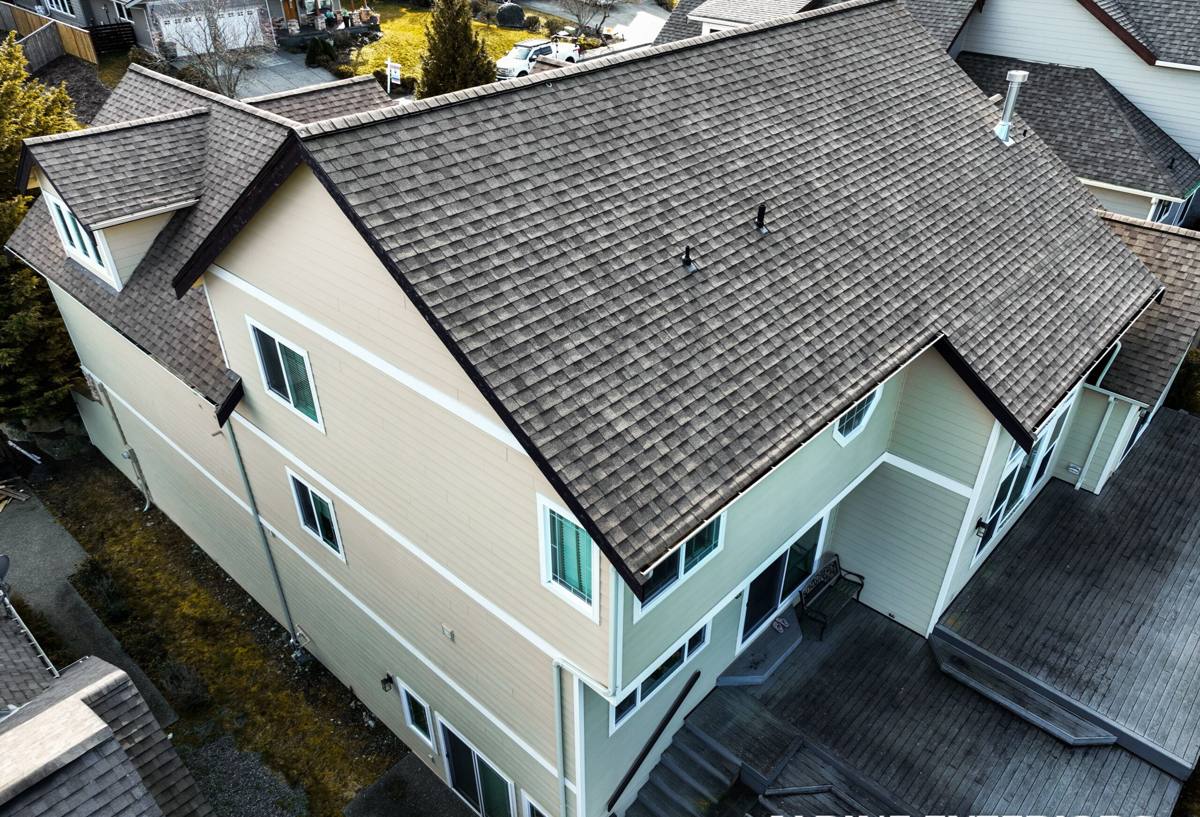
What Fairhaven's Environment Does to an Improperly Built Deck
Salt Air and Corrosion
Standard electro-galvanized fasteners and hardware are not built for a marine-influenced environment. Within a handful of years, exposed screw heads, joist hanger nails, and structural connectors near the bay can start to rust, weep stains into the decking, and eventually lose holding strength. This is one of the most common corners cut on cheaper deck builds, and it's invisible until it fails.
Driving Rain and Wind-Driven Moisture
Storms off the Sound don't always fall straight down. Wind-driven rain gets pushed sideways into ledger connections, under poorly lapped flashing, and into end-grain cuts on decking boards that weren't sealed. Water that gets behind a ledger board and can't escape is one of the leading causes of hidden rot and, in worst cases, deck failure at the house connection.
Moss, Algae, and a Long Wet Season
Bellingham's wet season stretches long, and a deck that doesn't drain and dry properly becomes a moss farm. Beyond the mess, moss and algae hold moisture against the wood surface, which accelerates wood decay and makes boards slippery and unsafe underfoot — a real concern on stairs and sloped approaches common on Fairhaven's hillside lots.
What a Correctly Built Deck Looks Like Here
A deck built for this specific environment isn't dramatically more expensive than a generic build, but it does require choosing the right materials and details up front rather than fixing them later.
- Stainless steel or heavy hot-dip galvanized fasteners and structural hardware, not standard coated screws, anywhere exposed to weather or salt air
- Self-adhering flashing membrane on the ledger board and any horizontal wood-to-house connection, lapped correctly to shed water outward
- Joist tape over the top of every joist to seal fastener penetrations and slow moisture absorption into the framing lumber
- Proper board spacing and consistent slope away from the house so water sheds instead of pooling
- Ventilation and clearance underneath the deck so the structure can dry out between storms instead of staying damp
- Decking material chosen with this specific moisture and moss exposure in mind, not just for upfront cost
Choosing a Decking Material for a Bellingham Bay Environment
There's no single "best" decking material — the right choice depends on budget, how much upkeep you're willing to do, and how close your property sits to salt air and shade. Here's how the common options actually perform in this climate.
| Material | How It Handles Salt Air & Moisture | Moss/Algae Resistance | Maintenance |
|---|---|---|---|
| Pressure-treated fir/hem-fir | Good if fasteners and flashing are upgraded; treatment resists rot but not corrosion of hardware | Low — needs regular cleaning | Annual cleaning, periodic sealing |
| Western red cedar | Naturally rot- and insect-resistant; still needs sealed end cuts and proper drainage | Moderate — natural oils slow growth somewhat | Cleaning plus stain/seal every 2-3 years |
| Composite decking | Excellent — doesn't absorb moisture or rot | Moderate to good depending on brand and surface texture | Periodic washing; no staining or sealing |
| PVC/capped polymer decking | Excellent — fully moisture resistant | Good — smoother surfaces shed moss more easily | Lowest — occasional washing |
We'll walk through this trade-off honestly during your estimate. Composite and PVC cost more upfront but save on the recurring maintenance that wood demands in a wet, mossy climate. Cedar is a good middle ground if you want a natural look and are willing to stay on top of cleaning and sealing. Whatever material you choose, it only performs as well as the framing and flashing underneath it.
Framing, Footings, and Fairhaven's Terrain
Fairhaven has more sloped and terraced lots than a lot of Bellingham neighborhoods, especially closer to the bay. That affects deck design in a few practical ways:
- Footing depth and soil conditions — footings need to be sized and set to local frost depth and soil bearing conditions, not guessed at, especially on sloped or fill soil common near the waterfront
- Elevated decks — taller decks on sloped lots need engineered post and beam sizing, proper cross-bracing, and code-compliant guardrails and stair geometry
- Older homes — many Fairhaven homes are older craftsman and character homes; tying a new ledger into older framing sometimes means sistering framing members or adding blocking to get a solid, code-compliant connection
- Drainage on slopes — decks built into a slope need thought given to how water moves underneath and around the structure, not just off the top of the decking
Permits and Code
Most deck projects of meaningful size in Bellingham and unincorporated Whatcom County require a building permit, and elevated decks almost always do. Permitted work means an inspector checks footing depth, ledger attachment, guardrail height, and stair rise/run against code — which protects you both for safety and for resale, since unpermitted decks are a common flag in home inspections. We handle the permit process as part of the job rather than leaving it to the homeowner.
Our Deck Building Process
1. On-Site Assessment
We look at your existing structure or site, the slope, sun and wind exposure, proximity to the water, and how the deck will connect to your home before recommending a design or material.
2. Design and Material Selection
We talk through decking material, railing style, and layout with the climate trade-offs laid out plainly — no pressure toward the most expensive option, just honest information so you can decide what fits your budget and how much maintenance you want to take on.
3. Permitting
Where a permit is required, we prepare the necessary drawings and handle submission and inspection scheduling.
4. Construction
Footings, framing, flashing, and decking are installed in that order, with the moisture-management details — joist tape, ledger flashing, fastener grade — built in from the start rather than treated as upgrades.
5. Final Walkthrough
We walk the finished deck with you, cover basic care for whatever material you chose, and make sure everything meets code before we call the job done.
Caring for a Deck in a Salt Air, Moss-Prone Climate
Even a well-built deck needs some seasonal attention in this climate. Here's what actually matters:
- Sweep debris and standing leaves off the deck regularly through fall — trapped organic matter holds moisture and feeds moss growth
- Clean the deck surface at least once a year with a deck-safe cleaner to remove early moss and algae before it takes hold
- Check fastener heads and visible hardware periodically for early rust staining, especially on decks closer to the water
- Keep gutters and downspouts near the deck clear so roof runoff isn't dumping extra water onto or under the structure
- Reseal wood decking (cedar or pressure-treated) on the schedule appropriate to that material — don't wait until it's visibly grey and dry
- Watch for soft spots, especially near the ledger connection and stair stringers, which can indicate hidden moisture damage
Why Hiring a Crew That Already Works in Fairhaven Matters
A contractor who regularly works this specific area already knows which fastener and flashing upgrades are worth insisting on near the bay, how Whatcom County permitting and inspection typically goes for deck projects, and how to handle the sloped, sometimes tight-access lots that are common in this part of Bellingham. That familiarity shows up in fewer surprises mid-project — whether that's discovering unexpected framing conditions on an older home or working around a lot's grade to get equipment and materials to the build site.
It also means the person building your deck understands that "built to code" and "built to last near saltwater" aren't automatically the same thing. Whatcom County's climate rewards contractors who treat moisture management and corrosion resistance as standard practice, not optional add-ons.
Get a Straightforward Estimate
If you're planning a new deck or replacing an aging one in Fairhaven, we're happy to take a look, walk you through material options honestly, and give you a clear estimate — no pressure, no obligation. Use the form below to get started.