 Bellingham Roofing
 Roof Repair in York: Built for This Corner of Bellingham's Climate
York is one of Bellingham's older established neighborhoods, and like most of the city it sits close enough to the water and the surrounding hills to catch the full range of what Whatcom County weather throws at a roof. That means salt-tinged air moving in off Bellingham Bay, rain that arrives sideways as often as it falls straight down, and long stretches of mild, damp weather that give moss and algae months at a time to take hold. None of that is unique to York, but it's the reality every roof in this neighborhood has to hold up against, year after year, whether the house is a few decades old or brand new.
Roof repair work here isn't just patching a leak and moving on. It's understanding why that leak happened in the first place, given the specific combination of exposure, pitch, shade, and material that a particular York roof deals with. A repair that ignores the climate tends to fail again within a season or two. A repair that accounts for it can buy a roof years of added life.
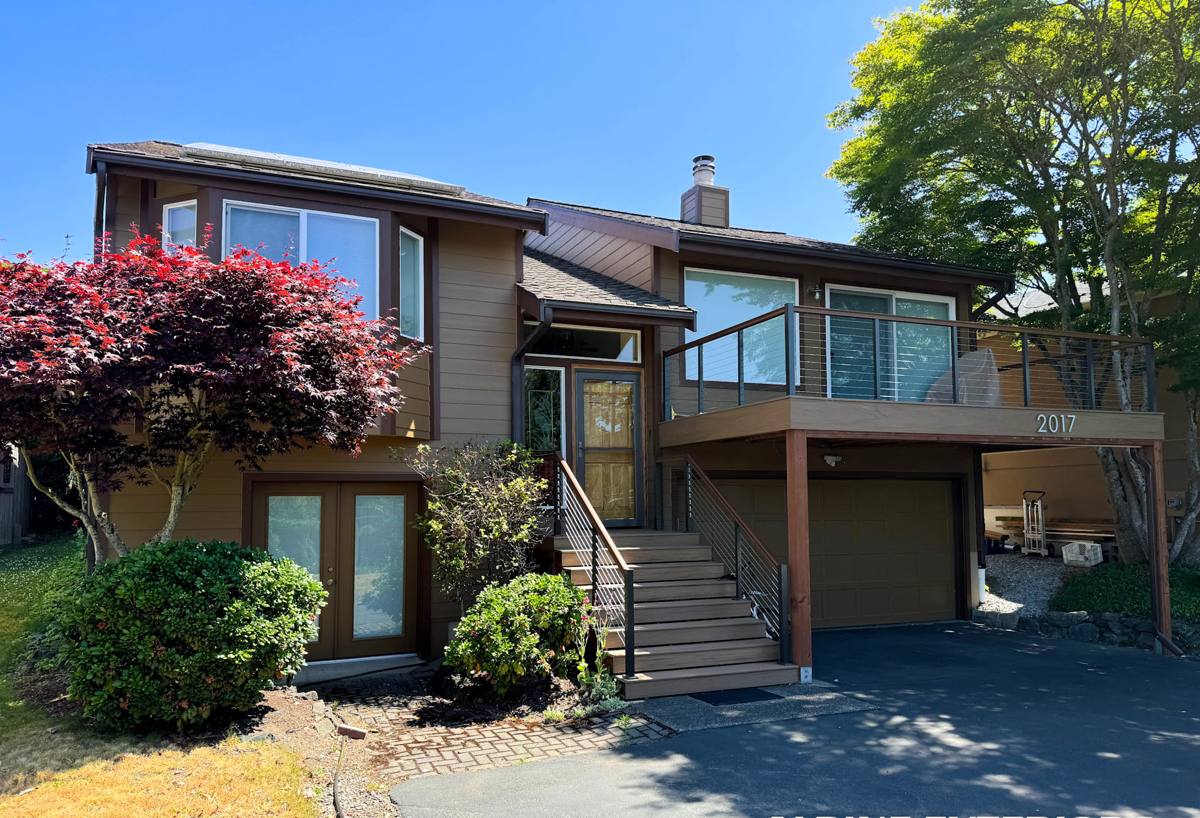
What Salt Air, Driving Rain, and Moss Actually Do to a York Roof
Salt-Laden Air and Metal Fatigue
Homes closer to Bellingham Bay pick up airborne salt that settles on roofing metal — flashing, drip edge, vent caps, gutters, and fasteners. Over time that accelerates corrosion, especially on lower-grade or unprotected metal. A flashing detail that would last decades in a dry inland climate can start pitting and thinning years sooner here. It's a slow process, which is exactly why it tends to get missed until a fastener head rusts through or a flashing seam finally opens up and starts leaking.
Wind-Driven Rain and Flashing Failures
Bellingham doesn't just get rain — it gets rain pushed sideways by wind coming off the water, and that changes where water actually tries to get into a roof. Straight-down rain mostly tests the field of the roofing material. Wind-driven rain tests every joint, lap, and penetration: chimney flashing, valley metal, vent boots, skylight curbs, and the edges where two roof planes meet. Most of the leaks we get called out for in this area trace back to a flashing detail or a lapped seam that was fine for normal rain but couldn't hold up once wind started forcing water uphill or sideways under the material.
A Long Moss and Algae Season
Whatcom County's mild, wet weather gives moss and algae a growing season that runs most of the year, not just a few weeks in spring. Shaded roof planes, north-facing slopes, and anything under mature trees stay damp longer between rains, and that's exactly where moss takes hold first. Left alone, moss doesn't just look bad — it holds moisture against the roofing surface, works under shingle tabs and shake butts, and can lift material enough to open a path for water that wasn't there when the roof was new.
Signs a York Roof Needs Repair, Not Just a Look
Some roof problems are obvious. Others show up as small clues that are easy to write off until they turn into an interior leak. Worth checking for, especially after a windy winter storm:
- Granule buildup collecting in gutters or at downspout outlets, a sign of shingle wear
- Dark streaking or thick moss growth concentrated on shaded or north-facing sections
- Curling, cracked, or missing shingles, particularly after a windstorm
- Rust staining or visible corrosion around flashing, vent pipes, or fasteners
- Soft or discolored ceiling patches, especially near chimneys, skylights, or where roof planes meet
- Daylight visible through roof sheathing from inside an attic space
- Sagging or uneven roof lines, which can point to deck or structural moisture damage
- Loose or lifted flashing at valleys, walls, or penetrations after a storm
Any one of these on its own might be minor. Two or three together, especially clustered in one area, usually means water has already found a way in and the repair needs to address the cause, not just the visible symptom.
What a Correct Repair Actually Involves
Diagnosing the Real Cause First
A leak's location inside the house is rarely the same as where water is actually entering the roof — water travels along the underlayment, sheathing, or framing before it shows up as a stain. A correct repair starts with tracing that path from the interior symptom back to the actual entry point, which often means checking flashing, valleys, and penetrations well upstream of where the ceiling stain appears. Patching the visible spot without finding the real source is the most common reason a "fixed" leak comes back.
Matching Materials and Technique to the Existing Roof
Repairs need to tie into the surrounding roofing correctly, not just get sealed over the top of it. That means matching shingle type, exposure, and fastening pattern on asphalt roofs; matching seam and panel details on metal; and respecting the layering and ventilation a wood shake roof depends on to dry out between rains. Mismatched materials or shortcuts at the tie-in point are a common source of repeat leaks, especially where a patch meets original flashing.
Flashing and Underlayment: The Details That Actually Stop Water
Most of what separates a repair that lasts from one that doesn't comes down to flashing and underlayment work, not the shingles themselves. Step flashing at walls, proper valley metal, correctly lapped underlayment, and sealed penetrations do the real work of keeping wind-driven rain out. On any repair, we replace flashing that's corroded, undersized, or improperly lapped rather than resealing it in place — caulk over a bad flashing detail is a temporary fix, not a repair.
Repair vs. Replacement: How We Help You Decide
Not every roof problem calls for a full replacement, and not every leak should be patched indefinitely. The right call depends on the roof's age, how widespread the damage is, and what's actually failing underneath the surface material.
| Factor | Leans Toward Repair | Leans Toward Replacement |
|---|---|---|
| Roof age | Under roughly two-thirds of expected material lifespan | At or beyond expected lifespan for the material |
| Damage extent | Isolated to one section, flashing detail, or penetration | Spread across multiple roof planes or recurring in several spots |
| Decking condition | Sheathing is sound once the leak source is fixed | Soft, rotted, or delaminated decking found during inspection |
| Moss/algae severity | Surface growth, treatable and preventable going forward | Growth has lifted or degraded the roofing material itself |
| Remaining warranty | Manufacturer or workmanship warranty still active and relevant | Warranty expired or void due to prior repair history |
We'll give you a straight answer on which side of that line your roof falls on, including what we find once we're actually up there — not just what makes sense from the ground.
Our Repair Process, Start to Finish
Inspection and Honest Diagnosis
Every repair starts with a full inspection of the roof, not just the reported leak area. We check flashing, valleys, penetrations, ventilation, and the general condition of the roofing material so nothing gets missed that could cause the next leak six months from now.
A Clear, Written Scope
Before any work starts, you get a written explanation of what we found, what caused it, and what the repair involves — in plain language, not a vague line item. If there's a decision to make between a targeted repair and a larger fix, we lay out the trade-offs so you can make that call with real information.
The Repair Itself
We remove and replace failed materials rather than layering new work over old problems, tie flashing and underlayment in correctly at every joint, and match the surrounding roofing so the repair blends in and performs the same as the original installation around it.
Cleanup and Follow-Up
The job site gets cleaned up, including a magnetic sweep for stray fasteners around the work area. If moss or algae contributed to the problem, we'll walk you through what ongoing care will actually prevent a repeat, rather than leaving you to guess.
Common Repair Calls We See Around York
The specific mix varies by house and roof age, but the calls we get in this part of Bellingham tend to fall into a handful of categories:
- Flashing repair or replacement at chimneys, walls, and valleys after a leak or a windstorm
- Shingle or shake replacement in isolated storm-damaged sections
- Vent boot and pipe penetration repairs, a common point of slow, hard-to-spot leaks
- Moss and algae removal paired with a plan to slow regrowth
- Gutter and drip edge repair where clogged or damaged runoff paths are pushing water back under the roofing
- Attic ventilation corrections where trapped moisture is accelerating material wear from underneath
Why a Crew That Already Works in York Matters
A roof repair is only as good as the diagnosis behind it, and that diagnosis gets sharper with local, repeated exposure to how this specific climate wears roofs down. A crew that regularly works Bellingham roofs knows which flashing details tend to fail first under wind-driven rain off the bay, which roof orientations hold moss longest through a Whatcom County winter, and which materials genuinely hold up to salt air versus which ones just look fine for the first few years. That's the kind of judgment that comes from doing this work here repeatedly, not from a general checklist.
It also matters for permitting, code requirements, and simply being available if a repair needs a follow-up visit. A local crew has a reputation in the neighborhood to stand behind, and that's a different level of accountability than a contractor passing through for a single job.
Maintenance That Keeps a Repair From Becoming a Pattern
A good repair fixes what's currently wrong. Keeping it fixed takes a little ongoing attention, especially in a climate that never really gives a roof a long dry stretch to recover in. Worth keeping on a simple annual schedule:
- Clear gutters and downspouts before the fall rains ramp up
- Remove moss buildup on shaded or north-facing roof sections before it spreads
- Trim back tree limbs that keep sections of the roof shaded and damp
- Have flashing and penetrations checked after any significant windstorm
- Schedule a full inspection every one to two years, even with no visible problems
None of that replaces a proper repair when something's actually failed, but it does a lot to keep a repaired roof from developing the same problem again in a year or two.
If you're dealing with a leak, storm damage, or a roof in York that just needs an honest look, we're glad to come take a look and give you a straightforward, no-pressure estimate — use the form below to get started.