 Bellingham Roofing
 Siding in York Has to Handle Bellingham Bay, Not Just Rain
York sits close enough to Bellingham Bay that salt-laden air is a real factor in how siding ages here, not just an abstract concern. Add Whatcom County's driving winter rain and the long, damp shoulder seasons that let moss and algae take hold on north- and west-facing walls, and you've got a climate that is genuinely hard on exterior materials. Siding that performs fine in a drier inland climate can fail early here — warping, delaminating, or feeding mold and moss growth within a few wet seasons.
That's the lens we use on every York job: not "what looks good going up," but "what still looks good and still keeps water out in year eight, year fifteen, year twenty-five." James Hardie fiber cement is the only siding system we install, and this page walks through why that matters specifically for a York home, what a correct installation actually involves, and how our process works in this neighborhood.
What York's Housing Stock Means for a Siding Job
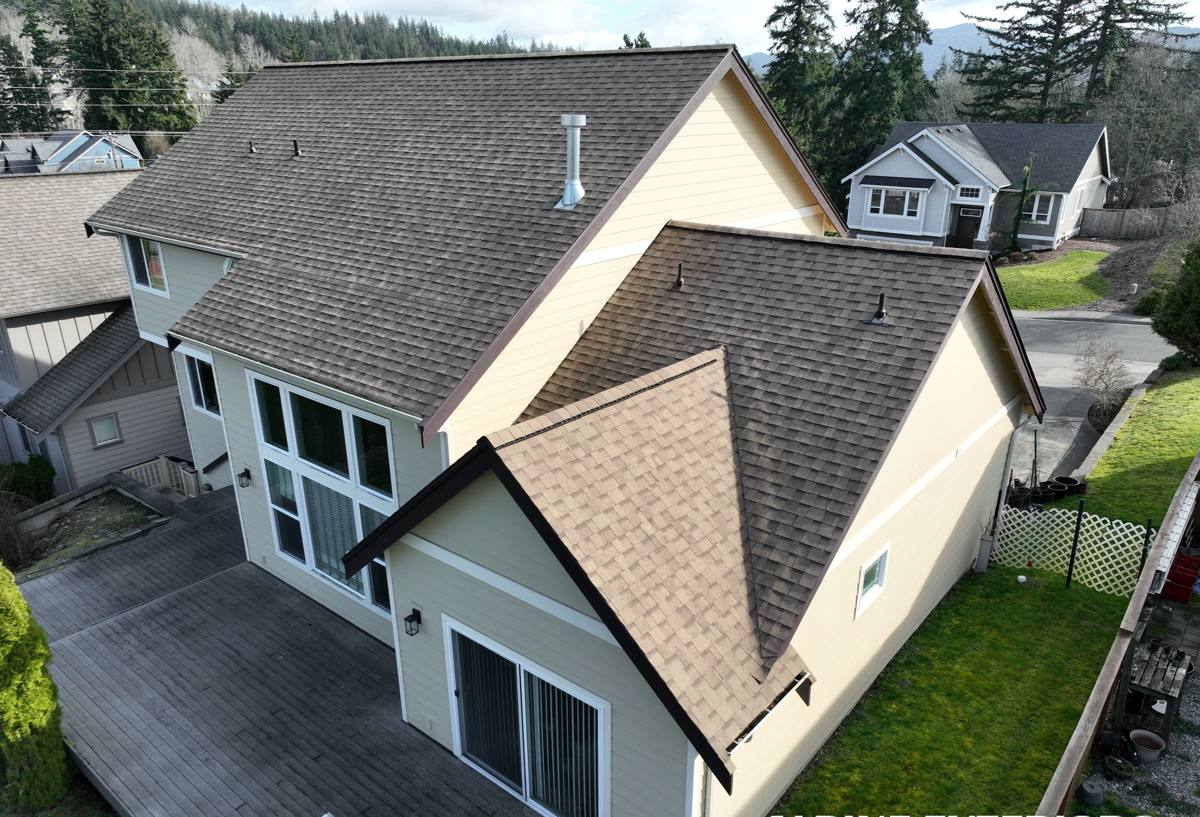
York is one of Bellingham's established neighborhoods, with a housing mix that includes a good number of older homes alongside newer construction and infill. That mix matters for siding work in a few practical ways:
Older wall assemblies need a real look, not a guess
On older homes, we don't just measure and order material. We check what's under the existing siding — sheathing condition, whether there's a functioning drainage plane, signs of past moisture intrusion around windows and trim — before we quote the job. Fiber cement is only as good as the wall assembly behind it, and skipping this step is how "new siding" ends up hiding old problems instead of fixing them.
Mixed architecture calls for the right product line, not a one-size answer
York's homes span a range of styles and eras, which means the right board width, plank exposure, and trim profile isn't the same from house to house. We match Hardie's product lines and reveal to the home's existing character rather than defaulting to whatever's fastest to install.
What a Correct James Hardie Installation Actually Involves
James Hardie siding is engineered to perform for decades, but that performance depends entirely on installation details that are invisible once the job is done. This is where a lot of siding jobs — with any material — quietly go wrong.
Flashing and moisture management come first
Every window, door, and penetration needs proper flashing and a continuous water-resistive barrier behind the siding. In a climate with as much driving rain as Bellingham gets, a missed flashing detail isn't cosmetic — it's a slow leak that shows up as rot two or three years later.
Clearances and fastening to spec
Hardie's installation requirements call for specific clearances from grade, roof lines, decks, and other transitions, along with correct nail or screw placement and spacing. These aren't suggestions — they're what keeps the boards from trapping moisture or cracking at fastener points over time.
Caulking and paint touch-up at cut edges
Factory-primed or ColorPlus-finished edges that get cut on site need to be sealed correctly. Left bare, a cut edge is a weak point where moisture can wick into the board.
Correct joint and seam treatment
Butt joints, corners, and seams need consistent, correct treatment across the whole house — not just the sections that are easy to reach. A siding job that looks tight from the ground can have shortcuts higher up or around the back.
Why We Only Install James Hardie
We get asked why we don't offer vinyl, LP SmartSide, or cedar as options. The honest answer is that we standardized on James Hardie because of what happens to those other materials specifically in a climate like ours — salt air, sustained moisture, and moss pressure — and we'd rather install one product correctly than offer several and hope the cheaper ones hold up.
| Factor | James Hardie Fiber Cement | Vinyl | Cedar |
|---|---|---|---|
| Moisture behavior | Engineered fiber cement resists swelling, warping, and rot | Doesn't rot, but can warp or buckle with heat and doesn't manage trapped moisture behind it | Natural wood absorbs moisture; needs consistent maintenance to resist rot |
| Salt air / coastal exposure | Formulated to hold up under coastal conditions | Can become brittle and discolor over time near salt air | Weathers and grays quickly; more upkeep near the water |
| Moss and algae resistance | ColorPlus finish sheds growth better and cleans up easier | Growth takes hold on textured or dirty surfaces | Porous surface is a magnet for moss in damp shade |
| Fire performance | Non-combustible material | Combustible; can melt or deform near heat | Combustible |
| Ongoing maintenance | Occasional wash; ColorPlus finish holds color for years | Low, but limited repair and color options once it fades | Regular sealing/staining or repainting required |
Vinyl and cedar aren't bad products in every context — but for what York's climate does to a wall over ten or twenty years, we don't think they hold up as well as engineered fiber cement, and we'd rather stand behind one product line we trust than sell whatever a homeowner asks for.
Choosing the Right Hardie Product Line for This Climate
James Hardie makes climate-engineered product lines, and matching the right one to a Bellingham home is part of doing the job correctly.
HZ5 vs. HZ10
Hardie's HZ5 line is engineered for regions with freeze-thaw cycles and moisture exposure similar to what Western Washington sees, while HZ10 is built for warmer, wetter climates further south. For York and the greater Bellingham area, HZ5 is the correct baseline — it's formulated to resist the moisture and temperature swings this region actually experiences rather than a climate profile that doesn't match ours.
ColorPlus finish vs. field-painted
Hardie's ColorPlus factory finish is baked on and backed by its own finish warranty, and it holds up better against UV and moisture than a field-applied paint job. For a home exposed to salt air and long wet seasons, that factory-cured finish is worth the difference over time — less fading, less need for repainting, and a cleaner line of warranty coverage if something does go wrong with the finish itself.
Our Process on a York Job
The steps don't change much from house to house, but the details we're checking for do, based on what we find on that specific home.
1. On-site assessment
We look at the existing siding, sheathing, trim, and any visible signs of moisture damage or past repairs. We also check drainage around the foundation and roofline transitions, since water management above the siding line affects how it performs.
2. Scope and product selection
We walk through board profile, exposure, and color options that fit the home, and confirm HZ5 as the product line for this climate. We give a clear, itemized scope before any work starts.
3. Prep and removal
Old siding comes off, the sheathing gets inspected and repaired where needed, and a proper water-resistive barrier and flashing package goes in before a single Hardie board is hung.
4. Installation to spec
Boards are installed with correct clearances, fastening, and joint treatment throughout — not just on the street-facing elevations.
5. Final walkthrough
We walk the finished job with the homeowner, checking caulking, trim details, and touch-up before calling it done.
Maintenance to Expect After Installation
One advantage of fiber cement over cedar or vinyl is how little ongoing work it asks for — but "low maintenance" isn't "no maintenance," especially in this climate.
- Rinse the siding down once or twice a year to keep salt residue and organic buildup from settling into the finish
- Check caulking at trim, windows, and joints every couple of years and touch up if it's cracking or pulling away
- Keep gutters clear and downspouts directed away from the foundation so runoff isn't running down the wall
- Trim back plants and shrubs that hold moisture against the siding or block airflow
- Watch north- and west-facing walls for early moss or algae growth and clean it before it spreads
- Have a professional check flashing and caulking after any major windstorm or if you notice a new stain or soft spot
Why Hiring a Crew That Already Works in York Matters
Siding work in an established Bellingham neighborhood isn't identical to siding work on a new-construction lot outside town. A crew that already works in York knows what to expect from the local permitting process, has a feel for the age and construction patterns common in the area, and isn't guessing at how to work around mature landscaping, tighter lots, or older wall assemblies for the first time on your house. That familiarity shows up in fewer surprises mid-project and a scope that's accurate from the start rather than revised after demo day.
What to check before you hire anyone
- Do they install James Hardie to manufacturer spec, including flashing and clearance requirements — not just "siding in general"?
- Will they inspect the sheathing and wall assembly before quoting, not just measure the exterior?
- Do they recommend the correct climate-engineered product line (HZ5) for this region?
- Can they explain their flashing and moisture-management approach in plain terms?
- Do they provide a written, itemized scope before work starts?
- Are they familiar with local permitting requirements for exterior work?
If your York home's siding is showing moss, fading, soft spots, or visible wear from Bellingham's weather, we're happy to take a look and walk you through what we're seeing. Reach out for a free, no-pressure estimate — the form below gets you started.