 Bellingham Roofing
 Storm Damage Roof Repair Built for Sehome's Weather
Sehome sits close enough to Bellingham Bay that salt-laden air and wind-driven rain off the water reach every roof in the neighborhood, and close enough to Sehome Hill that mature tree cover keeps roofs shaded, damp, and dropping debris for most of the year. That combination is harder on a roof than either factor alone. Salt air accelerates corrosion on fasteners, flashing, and any exposed metal. Driving rain finds the smallest gaps in flashing and underlayment and pushes water sideways instead of letting it run off. And the shade from the surrounding tree canopy means roofs in Sehome dry out slower after every storm, which sets the stage for moss and rot to take hold in ways that sunnier Bellingham neighborhoods don't deal with as much.
Storm damage repair here isn't just about patching whatever a windstorm knocked loose. It's about repairing the damage correctly the first time, in a way that accounts for how much longer this neighborhood's roofs stay wet and how much more corrosion pressure they're under. A quick patch that would hold up fine in a drier part of Whatcom County can fail here within a season or two.
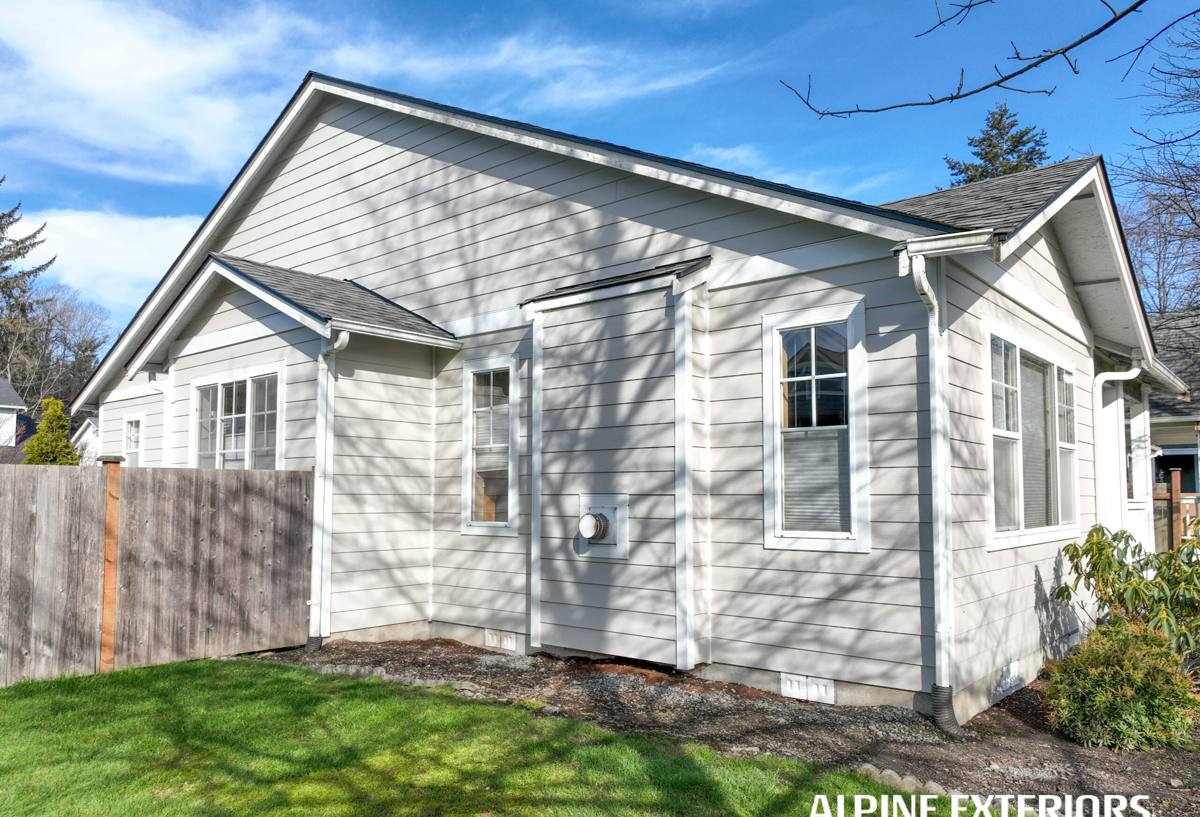
Signs of Storm Damage Sehome Homeowners Should Watch For
Storm damage isn't always obvious from the ground, and in a tree-covered neighborhood like Sehome, moss and debris can hide problems that would otherwise be easy to spot. After any significant wind or rain event, it's worth checking for the following:
- Shingles that are cracked, curling, creased, or missing entirely, especially on roof faces exposed to prevailing wind
- Granules collecting in gutters or at the base of downspouts, which signals shingle wear from wind abrasion or impact
- Flashing around chimneys, vents, and roof-to-wall transitions that looks bent, lifted, or separated
- Water stains on interior ceilings or upper walls, even faint ones, which often show up days after the actual storm
- Sagging sections of roofline, which can indicate saturated decking underneath
- Debris buildup — broken branches, needles, moss mats — that's trapping moisture against the roof surface
- Gutters pulling away from the fascia or overflowing during rain, which points to blockage or damage upstream
None of these on their own always means a major problem, but any of them is a reason to have the roof looked at rather than wait and see.
What a Correct Storm Damage Repair Actually Involves
Starting With a Full Inspection, Not Just the Obvious Spot
Wind and rain rarely damage just one square foot of roof. If a homeowner points out a leak in one room, we're checking the whole roof plane above it and the flashing details around it, because storm damage tends to follow a path — wind lifts an edge, rain gets underneath, and the water travels along the underlayment before it ever shows up as a stain inside the house. Repairing only the spot where the leak appeared usually means it comes back somewhere else.
Matching Materials, Not Just Covering the Hole
A patch that doesn't match the existing shingle profile, color, or age will shed water differently than the surrounding roof and often becomes the next weak point. When exact matches aren't available, we talk through the honest options with the homeowner — a slightly visible repair now, or a broader section replacement that blends in — rather than making that call without them.
Checking the Decking Underneath
If water has been getting under the roofing for any length of time, the plywood or plank decking underneath can be soft, delaminated, or rotted. Nailing new shingles over damaged decking doesn't hold, and it hides a problem that gets more expensive the longer it sits. Any proper storm repair includes opening up the area enough to see what condition the decking is actually in.
Flashing and Underlayment Come First
Most leaks that get blamed on shingles are actually flashing or underlayment failures. Storm repair work should always include a close look at step flashing, valley flashing, and pipe boots, since these are the points most likely to fail under wind-driven rain and the most commonly overlooked in a rushed repair.
Repair or Replace? How We Help Sehome Homeowners Decide
Not every storm-damaged roof needs full replacement, and not every roof can be responsibly patched. The right call depends on the roof's age, how widespread the damage is, and how much of the roof's remaining service life has already been used up.
| Factor | Favors Repair | Favors Replacement |
|---|---|---|
| Roof age | Under 10-12 years, or recently replaced | Near or past typical material lifespan |
| Extent of damage | Isolated to one section or slope | Spread across multiple roof planes |
| Decking condition | Solid, dry decking under the damaged area | Soft or rotted decking in multiple spots |
| Material availability | Matching shingles or panels still available | Discontinued material, poor color/profile match |
| Storm history | First significant damage event | Repeated damage or leaks over several seasons |
We walk through this with every homeowner in plain terms, including cases where a repair is the honest answer even though a replacement would be a bigger job for us. A roof that only needs a repair doesn't need to be sold a replacement.
Our Storm Damage Repair Process
- Inspection and documentation. We assess the full roof, not just the reported problem area, and photograph the damage for the homeowner's records and any insurance claim.
- Written scope and pricing. Before any work starts, the homeowner gets a clear explanation of what's damaged, what needs to happen to fix it correctly, and what it costs — no vague allowances.
- Temporary protection if needed. If a roof is actively leaking or has exposed decking, we get it weathertight first, even if the full repair has to wait a day or two for materials.
- The repair itself. Damaged shingles, flashing, underlayment, and decking are replaced as needed, matched to the surrounding roof as closely as materials allow.
- Final walkthrough. We go over the completed work with the homeowner and point out anything else on the roof worth keeping an eye on.
Working With Your Insurance Company
Most storm damage repairs in Sehome involve an insurance claim, and the documentation matters as much as the repair itself. Adjusters need clear evidence connecting the damage to a specific weather event, not just a general description of wear. We photograph damage thoroughly, describe the likely cause in plain terms, and provide a scope of work that an adjuster can review without guesswork. We don't handle the claim on the homeowner's behalf or promise a specific settlement outcome — that's between the homeowner and their insurer — but we make sure the roofing side of the paperwork is accurate and complete.
Moss and Tree Debris: The Ongoing Challenge in Sehome
Sehome's tree cover, including the forested slopes around Sehome Hill, is part of what makes the neighborhood pleasant to live in, but it's also a steady source of roof stress. Falling branches and needles during windstorms can chip or crack shingles even without a direct large-limb impact. Shade keeps roof surfaces damp long after a storm has passed, which is exactly the condition moss needs to establish itself. Once moss takes hold, it holds moisture against the shingle surface and works its way under tabs and around fasteners, which is how a moss problem eventually becomes a leak.
Storm damage repair in a neighborhood like this isn't complete if it ignores this cycle. Part of doing the job right is clearing moss and debris from the repaired area and nearby roof sections, checking that gutters and downspouts are clear so water actually leaves the roof, and flagging any tree limbs overhanging the roofline that are likely to cause repeat damage in the next storm.
Why a Crew That Already Works in Sehome Makes a Difference
A roofer who works regularly in Sehome has already seen how this specific mix of salt air, driving rain, and shade-driven moss plays out on real roofs in the neighborhood. That matters when it comes to knowing which flashing details tend to fail first, which shingle types hold up better under a heavy tree canopy, and how aggressive moss and debris removal needs to be to actually solve the problem instead of just resetting the clock. It also means shorter response times after a storm, when getting a tarp on an exposed roof section quickly can be the difference between a repair job and a much larger one.
If you're dealing with storm damage on your Sehome roof, or you just want an honest read on what a recent windstorm may have done, we're glad to take a look. Reach out for a free, no-pressure estimate using the form below — we'll walk the roof, explain what we find in plain language, and give you a straight answer on what it needs.