 Bellingham Roofing
 Siding Built for the Puget Area, Not Just "the Pacific Northwest"
Homes in and around Puget sit in a specific microclimate within Whatcom County — close enough to the water to pick up salt-laden air off Bellingham Bay, exposed to wind-driven rain that hits siding at an angle instead of falling straight down, and shaded enough through the fall and winter months to grow a steady crop of moss and algae. Generic siding advice written for "the Northwest" tends to gloss over how much these three factors compound on each other. A siding system that handles occasional rain fine can still fail early when it's also absorbing salt air and staying damp under moss for months at a stretch.
This page is about one job done right in this one area: full siding replacement for Puget homes, what the climate actually demands of the material and the installation, and why the crew doing the work matters as much as the product going on the wall.
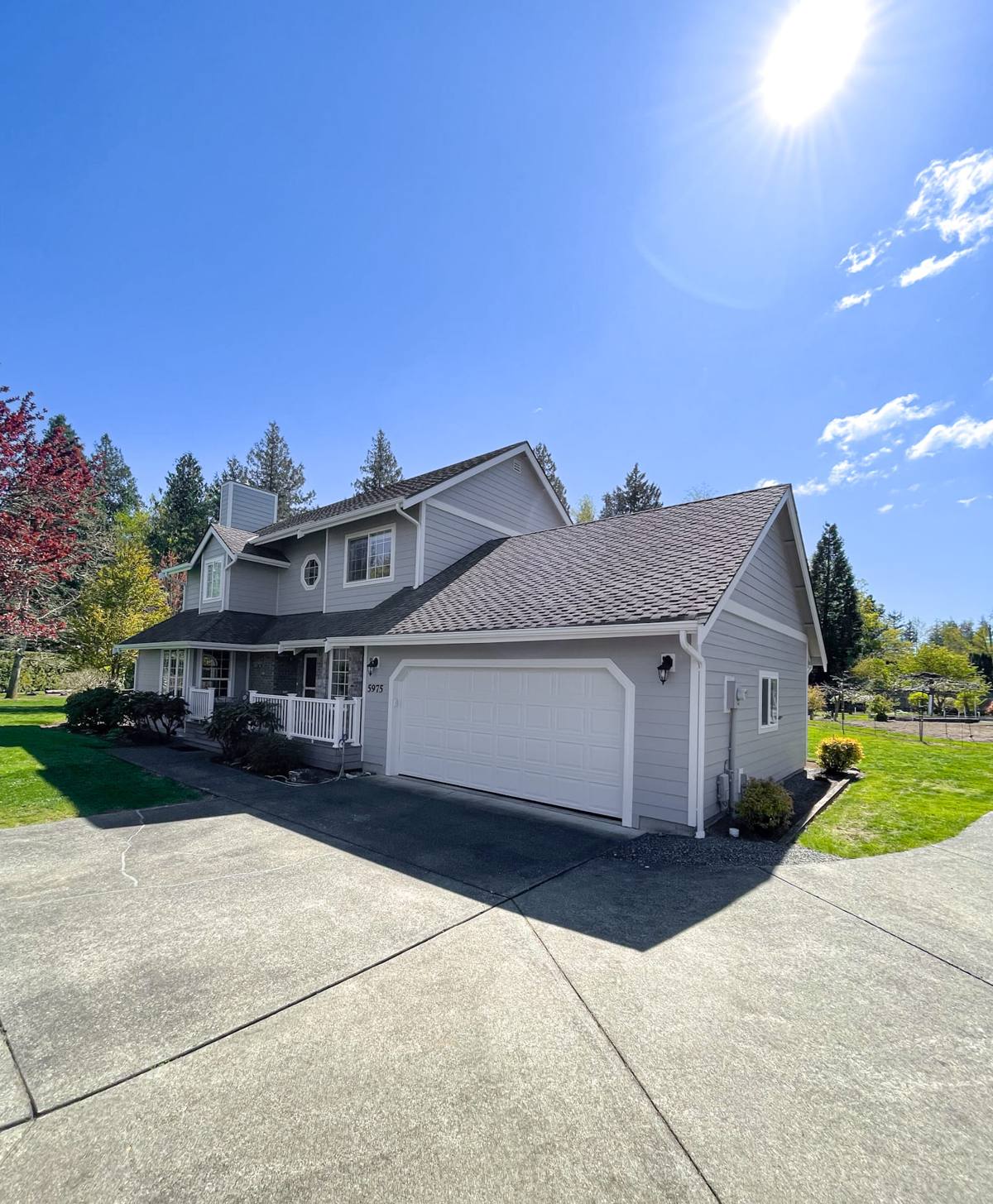
What Marine Exposure and Moss Season Actually Do to Siding
Salt Air and Corrosion
Proximity to Puget Sound means airborne salt settles on exterior surfaces even on days with no rain at all. Over years, that salt accelerates corrosion on fasteners, trim flashing, and any metal components tied into the siding assembly. It also breaks down lower-grade paint films faster than inland exposure would, which is why factory-cured, baked-on finishes hold up so much better here than field-applied paint.
Driving Rain and Moisture Intrusion
Wind off the water doesn't let rain fall straight down — it pushes it sideways, into laps, seams, and butt joints that would stay dry in a calmer climate. Siding that isn't installed with the right clearances, flashing, and lap coverage for this kind of exposure will let moisture behind the cladding long before the surface material itself looks worn.
Moss, Algae, and Extended Shade
Whatcom County's moss season runs long, and Puget's tree cover and cloud cover extend it further. Moss and algae hold moisture against a wall surface for weeks at a time, which is hard on any siding material's finish and, on porous products, can accelerate rot underneath if the water finds a way in.
Why We Only Install James Hardie Fiber Cement
We install one siding product on Puget-area homes: James Hardie fiber cement. That's a deliberate standard, not a default. Fiber cement is non-combustible, dimensionally stable in wet-dry cycling, and — critically for this climate — engineered in different formulations for different regions. The versions we use in Western Washington are built for a freeze-thaw, high-moisture profile rather than a hot, dry, or hot-humid climate, which matters when the product is going to spend a long, wet season absorbing rain and shade every year.
Hardie's ColorPlus finish is baked on at the factory rather than sprayed or rolled on-site, which gives it much better resistance to the fading and chalking that salt air and UV exposure cause on field-applied paint over time. It's also backed by a strong, transferable limited warranty — an asset if the home changes hands, since warranty coverage on lower-tier products often doesn't transfer as cleanly.
We don't install vinyl, LP SmartSide, Cemplank, Allura, primed spruce, or cedar. Each of those has genuine strengths — vinyl is inexpensive, cedar looks the part, engineered wood is lighter to handle — but each also comes with a real trade-off in this specific climate: vinyl can warp and doesn't stop moisture as well as a properly flashed rigid product; engineered wood products are more sensitive to sustained moisture exposure at cut edges and butt joints; and untreated or primed wood needs a maintenance schedule most homeowners don't want to keep up with in a climate that gives wood so many chances to stay wet. We'd rather explain that trade-off honestly up front than install something we don't think will hold up on a Puget-area home for the long haul.
Material Comparison for This Climate
| Material | Moisture Resistance | Moss/Algae Resistance | Fire Rating | Typical Maintenance |
|---|---|---|---|---|
| James Hardie Fiber Cement | High — dimensionally stable, factory-sealed edges available | High — dense surface resists growth better than porous wood | Non-combustible | Low — occasional wash, no repainting cycle with ColorPlus |
| Vinyl Siding | Moderate — panels can allow water behind at seams | Moderate — smooth surface but seams collect debris | Combustible, can deform near heat sources | Low, but limited color/repair options once faded |
| Engineered Wood (LP-type) | Moderate — vulnerable at cut edges and joints if not sealed | Moderate — treated to resist, but not immune | Combustible | Moderate — edge sealing and inspection needed |
| Cedar / Untreated Wood | Low to moderate — absorbs moisture, needs finish upkeep | Low — organic material feeds growth if damp | Combustible | High — regular refinishing and moss treatment |
What a Correct Siding Replacement Involves
Tear-Off and Inspection
Replacement starts with removing the existing siding down to the sheathing, which is the only real opportunity to see what's been happening behind the old material — hidden water staining, soft sheathing, or corroded fasteners that a re-side over the top would just seal back in. In a climate this wet, skipping this step is how small problems turn into structural ones.
Weather Barrier and Flashing Detail
A weather-resistive barrier goes over the sheathing, with flashing detailed at every window, door, and penetration so wind-driven rain has a drainage path instead of a way in. This is where a lot of the long-term performance of a siding job actually gets decided — it's largely invisible once the siding is up, which is exactly why it needs to be done right the first time.
Fastening and Clearances
James Hardie panels and planks have specific fastening patterns, minimum clearances from grade, decks, and roof lines, and gap requirements at trim — all of which matter more in a climate where those gaps are the difference between water draining away and water sitting against the wall. Installing to Hardie's published specifications is also what keeps the product warranty intact.
Finish Install
Once the field siding is up, trim, caulking at appropriate joints only (not everywhere — over-caulking can trap moisture), and touch-up work complete the job. A correct finish should need very little attention for years, which is the point of paying for a proper installation instead of a fast one.
Signs a Puget-Area Home Needs Siding Replacement Now
- Soft or spongy spots when you press on siding, especially near the bottom courses or under windows
- Persistent moss or algae growth that comes right back after cleaning
- Visible warping, buckling, or gaps opening up between boards or panels
- Paint that's chalking, peeling, or fading unevenly, particularly on walls facing the water or prevailing wind
- Rising energy bills with no other explanation, which can point to a compromised weather barrier
- Visible rot or fastener staining/rust streaks running down the siding face
Our Process, From Estimate to Finished Job
- Free on-site evaluation of your current siding, sheathing condition where visible, and problem areas specific to your home's exposure
- A written scope and price based on what your home actually needs — not a generic per-square-foot guess
- Full tear-off, sheathing repair where needed, and correct weather barrier and flashing installation
- James Hardie installation to manufacturer specification, including fastening, clearances, and trim detail
- Final walkthrough so you know what was done and what, if anything, to keep an eye on
Why Local Experience in This Specific Area Matters
A crew that already works Puget-area homes has seen how this particular combination of salt air, wind direction, and shade plays out on real walls — which elevations tend to take the worst weathering, where moss reliably comes back, and which older installation shortcuts show up as problems ten or fifteen years later. That's different from general Whatcom County or general Western Washington experience; it's knowing this specific pocket of exposure well enough to make good calls on flashing details and product placement before problems start, not after.
Cost Factors to Expect
Every home is different, but the biggest cost drivers on a Puget-area siding replacement are typically the condition of the sheathing underneath (repairs add cost but shouldn't be skipped), the complexity of the home's trim and roofline, and the siding profile chosen. James Hardie costs more upfront than vinyl or engineered wood — that's a real trade-off worth being upfront about — but it's weighed against a much longer service life in this climate and a lot less maintenance spending over the years you own the home.
If your siding is showing wear, or you're just planning ahead for a home in the Puget area, we're happy to take a look and give you a straightforward, no-pressure estimate — no invented urgency, just an honest read on what your home needs. The form below is a good place to start.