 Bellingham Roofing
 Building a Deck That Actually Holds Up in Birchwood
Birchwood sits close enough to Bellingham Bay and the Puget Sound shoreline that salt-laden air is a real factor in how outdoor structures age, and that's on top of the region's long, wet stretch of fall-through-spring rain. A deck built here needs more than good looks on installation day — it needs to shrug off months of standing moisture, resist the slow creep of moss and algae on shaded boards, and keep its fasteners from corroding out from under it. We've built and repaired decks all over the Bellingham area, and Birchwood's mix of mature tree cover, marine humidity, and driving rain off the water is a pattern we know well.
This page focuses specifically on custom deck work for Birchwood homes — what the climate demands, what correct construction actually involves, and how we run the job from first look to final walkthrough.
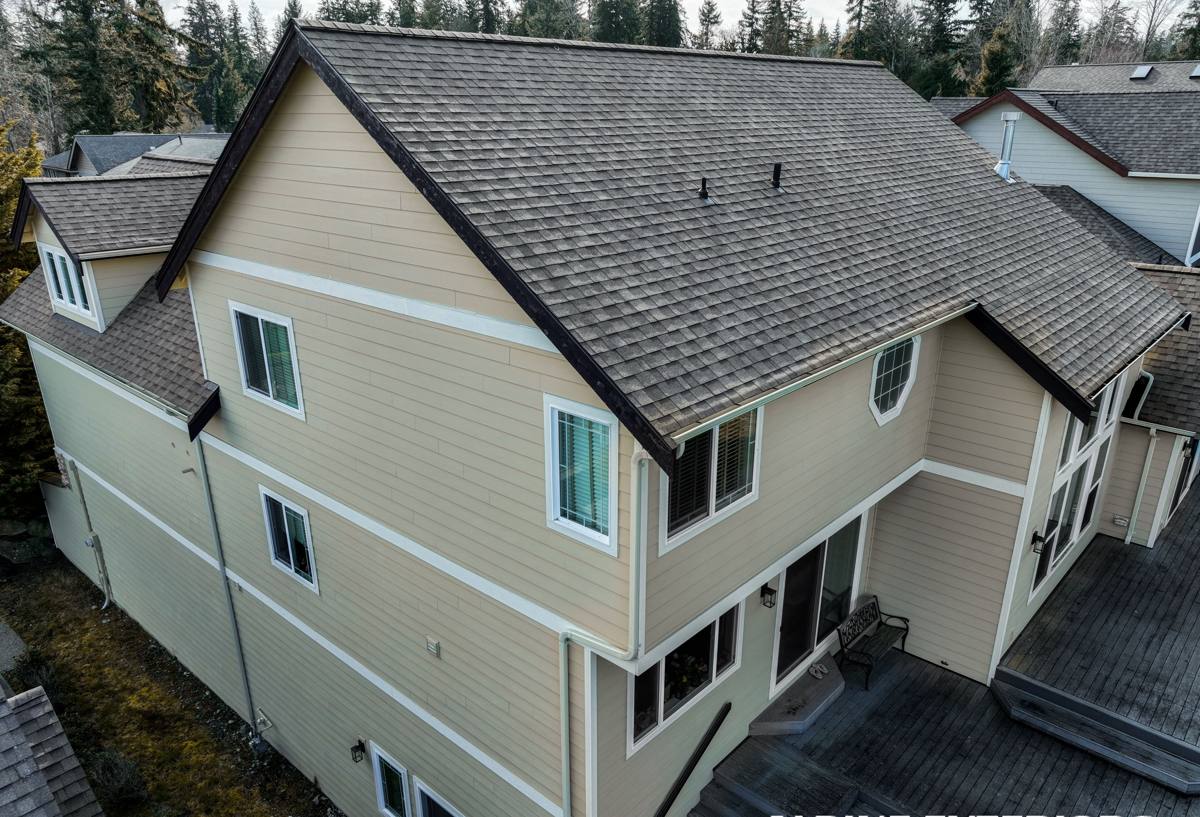
What Birchwood's Climate Actually Does to a Deck
Three conditions do most of the damage to decks in this part of Whatcom County, and they compound each other:
- Salt air: Airborne salt accelerates corrosion on any fastener, bracket, or connector that isn't rated for it. Standard interior-grade screws or under-spec'd hardware can start rusting and staining the wood around them within a couple of seasons.
- Driving rain: Wind-driven rain doesn't just fall straight down — it gets pushed sideways into ledger connections, under poorly lapped flashing, and into end grain that isn't sealed. Water that gets trapped rather than shed is what causes rot, not rain itself.
- Long moss season: Shaded, north-facing, or tree-covered sections of a deck can stay damp for weeks at a time in fall and winter. That's exactly the environment moss, algae, and mildew need to take hold, and once established they hold moisture against the wood surface and make boards dangerously slick.
None of these are exotic problems — they're just the normal cost of building outdoors in this climate. The difference between a deck that lasts and one that needs early repair usually comes down to whether these three factors were designed for up front.
What Correct Deck Construction Involves Here
Framing and Fasteners
Framing lumber should be rated for ground contact or exterior exposure as appropriate to its position, and every fastener — joist hangers, hurricane ties, structural screws, bolts — should carry a corrosion rating suited to a marine-influenced climate, not just a generic exterior rating. This matters more in Birchwood than it does further inland, and it's one of the most common places we see older decks cut corners.
Ledger Attachment and Flashing
Where a deck attaches to the house, the ledger board and its flashing are the single most important detail on the entire structure. Done wrong, this is where driving rain works its way behind the siding and into the rim joist, and it's often invisible until the rot is already advanced. We flash ledger connections to shed water outward and away from the house, not just to look sealed on installation day.
Footings and Drainage
Footings need to sit below frost depth and on stable, well-draining soil — a real concern on Birchwood lots with clay-heavy or poorly draining ground, where standing water around a post base can undermine it over years. Grading the area under and around the deck to move water away from footings is a small step that prevents a lot of long-term settling and structural movement.
Choosing the Right Decking Material for This Climate
There's no single "best" decking material — the right choice depends on how much upkeep you want to do, how much shade the deck gets, and your budget. Here's how the common options compare for a Birchwood property specifically:
| Material | Moisture & Moss Resistance | Maintenance | Typical Lifespan |
|---|---|---|---|
| Pressure-treated lumber | Good if sealed regularly; end grain and cut edges need re-treatment | Annual cleaning and re-sealing recommended | 15–20 years with upkeep |
| Cedar | Naturally rot- and insect-resistant, but still needs sealing in shaded, damp spots | Periodic cleaning, sealing every 2–3 years | 15–25 years with upkeep |
| Composite decking | Excellent — doesn't absorb water or rot, though moss can still grow on the surface film in constant shade | Occasional washing; no sealing or staining | 25–30+ years, manufacturer-warrantied |
| PVC decking | Excellent moisture resistance; smooth surface sheds algae more easily than wood-grain composites | Low — occasional washing | 25–30+ years, manufacturer-warrantied |
For heavily shaded lots — common where Birchwood properties back up to trees or have mature landscaping — we lean toward recommending composite or PVC decking, since the reduced maintenance burden matters more when a deck spends half the year damp. For open, sunnier sites, a well-maintained cedar or treated wood deck is a perfectly reasonable choice and often the better value.
A Note on Product Choice
We install what fits the site and the homeowner's maintenance appetite, not what's cheapest to source. If we steer you away from a particular board profile or fastening system for a shaded, damp section of your yard, it's because we've seen how that specific product behaves in exactly those conditions — not because of brand preference.
Design Considerations Specific to Birchwood Lots
Every deck design starts with a walk of the actual site, but a few things come up often enough in this neighborhood to mention up front:
- Tree cover and shade patterns: Mature trees are common on Birchwood lots, and they create the shaded, slow-drying zones where moss takes hold fastest. Board spacing, orientation, and material choice can all be adjusted to account for this.
- Slope and elevation changes: Many yards in this part of Bellingham have some grade to them. A deck built with proper footing depth and structural bracing for the slope will stay solid; one built without it can develop uneven settling over time.
- Wind exposure: Homes closer to open water can catch more wind-driven rain on one side of the house. We factor this into railing design, board orientation, and where we prioritize sealing details.
- Existing structure condition: If we're replacing or extending an older deck, we check the ledger, framing, and footings before assuming they're reusable — reusing compromised structure to save money up front almost always costs more later.
Our Process, Start to Finish
- Free on-site assessment: We walk the property, look at drainage, sun exposure, and any existing structure, and talk through what you actually want to use the space for.
- Design and material selection: We put together a layout and material recommendation based on the site conditions, not a one-size-fits-all package.
- Permitting: We handle the permit application and inspection scheduling required for the project — more on this below.
- Construction: Footings, framing, ledger flashing, decking, and railings, built in that order with each stage checked before the next begins.
- Final walkthrough: We go over the finished deck with you, including basic care guidance specific to the material you chose.
Permits and Local Requirements
Most new deck construction and many deck replacements in the Bellingham area require a building permit, particularly for structures attached to the house or built above a certain height off grade. Requirements can vary based on your specific property and jurisdiction within Whatcom County. We handle the permit process as part of the job so you're not left tracking down inspection requirements yourself, and so the finished deck is built to code rather than just built to look finished.
Managing Moss, Algae, and Mildew Through the Wet Season
Even a well-built deck needs some seasonal attention in this climate — the goal is to stay ahead of moss rather than scrape it off after it's established. A simple annual routine goes a long way:
- Sweep debris and fallen leaves off the deck regularly through fall — trapped organic matter holds moisture and feeds moss growth.
- Clean the deck surface at least once a year with a wash appropriate to the material (wood vs. composite cleaners aren't interchangeable).
- Check and clear gaps between boards where debris collects, since clogged gaps trap water against the framing below.
- Inspect railings, stairs, and ledger flashing once a year for early signs of movement, staining, or fastener corrosion.
- Re-seal wood decking on the schedule appropriate to the product — don't wait until the surface is visibly graying to reapply.
- Trim back overhanging branches where practical to reduce shade and speed up drying after rain.
Repair, Refresh, or Rebuild?
Not every aging deck needs to be torn out. We assess three things to figure out the right scope: the condition of the structural framing and footings, the condition of the visible decking and railings, and how the ledger connection is holding up. A deck with solid framing but tired boards is often a straightforward re-deck. A deck with soft spots near the ledger, rusted-through hardware, or footings that have shifted usually needs to come down to the frame — patching around a structural problem just delays a bigger repair later. We'll always tell you honestly which situation you're in rather than defaulting to the more expensive option.
Why a Crew That Already Works Birchwood Matters
A deck built to a generic set of specs can still fail early if it's not built for the specific way this climate behaves — the shaded corners that never fully dry, the wind-driven rain off the water, the fastener corrosion that shows up two years in rather than day one. Crews that work Birchwood and the surrounding Bellingham neighborhoods regularly already know which details matter here and don't need to learn them on your project. That local familiarity shows up in the small decisions — flashing laps, fastener grade, board spacing over shaded framing — that don't show up on a spec sheet but determine how the deck actually holds up over the next 15 to 20 years.
If you're planning a new deck, replacing an aging one, or just want an honest read on whether your current deck needs repair or replacement, we're happy to come take a look. Reach out for a free, no-pressure estimate using the form below.