 Bellingham Roofing
 Board & Batten Siding Built for Birchwood
Board and batten is one of the most requested siding profiles in Birchwood, and it's easy to see why. The vertical lines suit the mix of craftsman, farmhouse, and modern homes found throughout this established Bellingham neighborhood, and the deep shadow lines the battens create give a home real texture instead of a flat, builder-grade look. But in Whatcom County, board and batten also has to survive weather that punishes vertical siding in specific ways. Salt air drifting off Bellingham Bay, driving wind-blown rain off the Sound, and a long, damp moss season put real demands on the boards, the battens, and everything hidden behind them. This page is about doing board and batten right for a Birchwood home specifically — not board and batten in general.
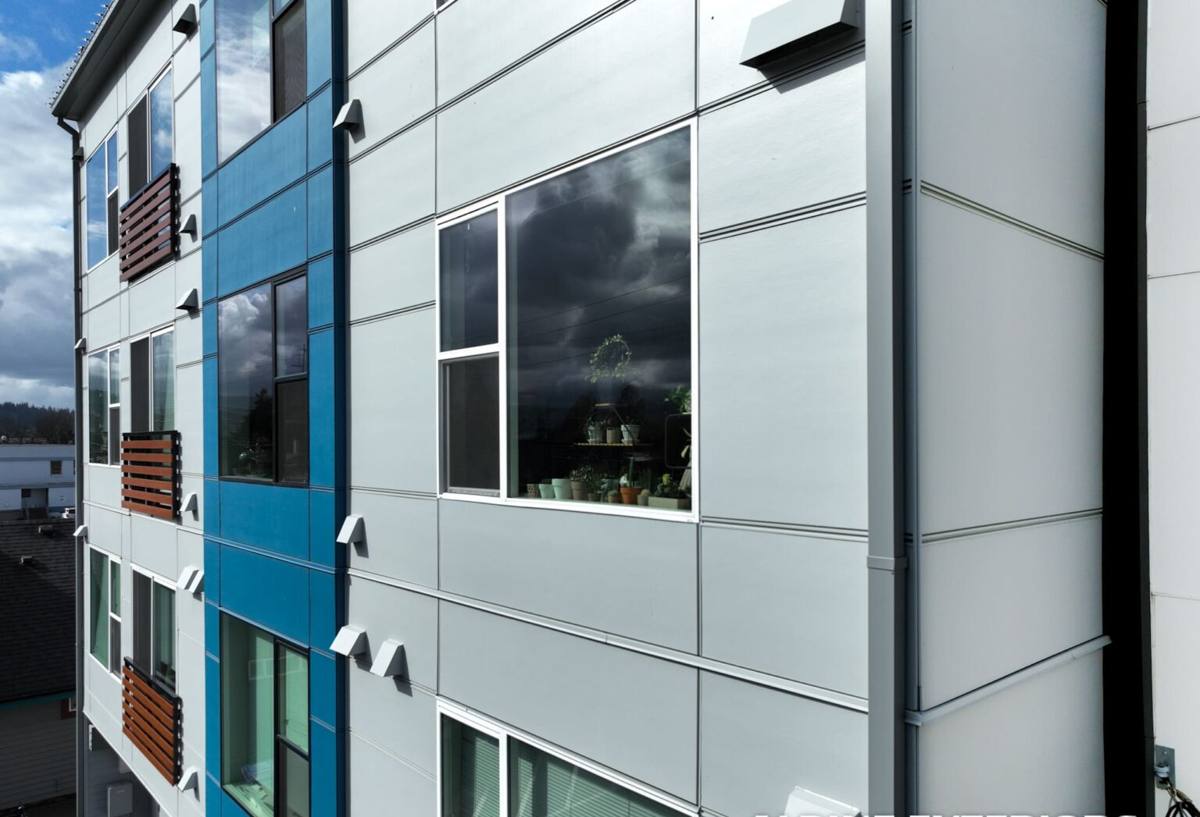
What Birchwood's Climate Does to Vertical Siding
Board and batten has more vertical seams than lap siding, and every one of those seams is a place water can find its way behind the cladding if the install isn't right. In this part of Bellingham, three climate factors matter most:
- Salt-influenced air: Homes closer to the water deal with airborne salt that accelerates corrosion on fasteners and speeds up the breakdown of lower-grade paint films over time.
- Driving, wind-blown rain: Storms off the Sound don't just fall straight down — wind pushes rain sideways into vertical seams and batten joints, which is exactly where a marginal install fails first.
- A long moss and mildew season: Mature tree canopy, shaded lots, and months of damp weather are common in this neighborhood, and vertical board and batten with poor drainage behind it holds moisture longer than it should, feeding moss and mildew growth on the siding face.
None of these are exotic problems — they're the normal cost of living in Whatcom County near the water. The difference between a board and batten job that looks good for two decades and one that needs attention in five years is almost always in the material choice and the details behind the boards, not the style itself.
James Hardie Board & Batten: The Only System We Install
We install James Hardie fiber cement exclusively — not LP SmartSide, not vinyl, not Cemplank or Allura, not primed spruce or cedar board and batten. That's a deliberate standard, not a sales preference, and it matters most on a profile like board and batten where every seam and batten edge is exposed to weather.
Hardie's board and batten options are built from fiber cement, which is non-combustible and dimensionally stable — it doesn't swell, cup, or split the way wood-based boards can when they take on moisture repeatedly through a wet Bellingham winter. For this climate, Hardie engineers its siding in HZ5 formulation, built specifically for the wetter, harsher weather zones of the Pacific Northwest. The factory-applied ColorPlus finish is baked on under controlled conditions and backed by its own finish warranty, which matters on a batten profile where field-painted cut edges and touch-ups are common failure points with other products.
We also stand behind the product with a real installation, not just the material. James Hardie's product warranty is transferable and substantial, but it depends on installation to their specifications — which is where a lot of board and batten jobs quietly go wrong.
What a Correct Board & Batten Installation Actually Involves
Board and batten looks simple from the curb — flat panels, narrow strips over the seams — but it's one of the less forgiving profiles to install correctly, because it has more vertical joints and more fastening points than horizontal lap siding. On a Birchwood home, we treat these details as non-negotiable:
Drainage plane and rainscreen gap
Every board and batten installation starts with a code-compliant weather-resistive barrier and, on most homes, a rainscreen furring strip that creates an air gap behind the siding. That gap lets any moisture that does get past the face of the boards drain and dry out instead of sitting against the sheathing — critical during Bellingham's long wet stretches.
Flashing at every transition
Windows, doors, roof lines, and any horizontal trim need proper flashing and correct shingle-lap sequencing so water is always directed out and down, never trapped behind a joint.
Fastening pattern and clearance
Hardie specifies fastener type, spacing, and embedment for board and batten assemblies, along with minimum clearance from grade, decks, and roof lines. Corrosion-resistant fasteners matter more here given the salt air near the water.
Batten spacing and panel gaps
Panels and battens need the manufacturer-specified expansion gaps and correctly sealed or capped joints — done wrong, this is where you get hairline cracking or water intrusion at the seams within a few seasons.
Board & Batten Compared to Other Siding Approaches
| Approach | How it handles Birchwood's climate | Long-term upkeep |
|---|---|---|
| James Hardie fiber cement board & batten | Engineered for PNW moisture (HZ5), dimensionally stable, non-combustible | Occasional wash; factory finish resists moss and fading far longer than field paint |
| Wood (cedar/primed spruce) board & batten | Attractive but absorbs moisture, prone to cupping and splitting with repeated wet-dry cycles | Regular repainting/staining and moisture monitoring required |
| Engineered wood (LP SmartSide) vertical panels | Better than raw wood but still wood-based; edges and cuts are moisture-sensitive if not sealed exactly to spec | Careful ongoing maintenance of seams, caulk lines, and touch-up paint |
| Vinyl board & batten | Won't rot, but can warp or become brittle with UV and temperature swings; not the crisp, deep-shadow look real board & batten gives | Low maintenance but limited repairability and shorter realistic lifespan |
Our Process for a Birchwood Board & Batten Job
- On-site assessment: We look at the home's exposure — how much sun and shade it gets, proximity to mature trees, and how the current siding or sheathing has held up to moisture.
- Tear-off and sheathing check: We remove the old siding and inspect the sheathing underneath for rot or hidden water damage before anything new goes up — this is where problems from a prior bad install usually surface.
- Weather barrier and rainscreen install: We install the drainage plane and furring system correctly the first time, since it's the part of the job you won't see again once siding goes up.
- Flashing and trim: Windows, doors, and roof transitions get properly detailed flashing before panels go on.
- Hardie panel and batten installation: Installed to James Hardie's fastening, spacing, and clearance specs so the manufacturer warranty stays intact.
- Final walkthrough: We review the finished work with the homeowner and confirm seams, caulking, and trim are clean before we consider the job done.
Moss Prevention and Ongoing Maintenance
Even the right siding system benefits from basic upkeep in a shaded, wet climate like Bellingham's. A well-installed Hardie board and batten job needs far less attention than wood or vinyl, but a few habits go a long way:
- Rinse siding periodically, especially on shaded or north-facing walls where moss and mildew tend to establish first
- Keep gutters clear so overflow doesn't run down the face of the siding
- Trim back branches and shrubs that keep siding damp or block airflow
- Inspect caulking at trim and window joints every year or two and touch up as needed
- Address any staining or discoloration early rather than waiting for it to spread
What Board & Batten Typically Costs to Get Right
| Cost factor | Why it matters |
|---|---|
| Tear-off and sheathing repair | Homes with prior moisture damage need repair before new siding goes on — this varies job to job |
| Rainscreen/furring system | Adds labor and material but is essential for long-term drainage in this climate |
| Trim and flashing detail | More window and roof transitions mean more flashing work |
| Panel and batten material | James Hardie fiber cement costs more upfront than vinyl but holds its finish and shape far longer |
| Color and finish | Factory ColorPlus finish adds cost over primed product but eliminates a full-home paint job down the line |
We don't quote board and batten pricing without seeing the home — the sheathing condition, wall height, trim complexity, and current siding all factor in. What we can say honestly is that Hardie board and batten, installed correctly, costs less over 20 years than repainting or replacing a wood or lower-grade product multiple times.
Why It Matters to Hire a Crew That Already Works Birchwood
Board and batten installation isn't complicated in theory, but it's unforgiving of shortcuts, and those shortcuts don't show up until a few wet seasons in. A crew that regularly works in Birchwood and the surrounding Bellingham neighborhoods already understands how local tree cover, exposure, and Whatcom County's rain patterns affect a vertical siding install — and builds the rainscreen, flashing, and fastening accordingly instead of applying a generic approach. That local familiarity, combined with a single-product standard we can stand behind, is the whole reason we only install James Hardie.
If you're considering board and batten siding for a Birchwood home, we're happy to take a look and talk through what your home specifically needs — no pressure, no obligation. Use the form below to request a free estimate.